Remedial Massage Course
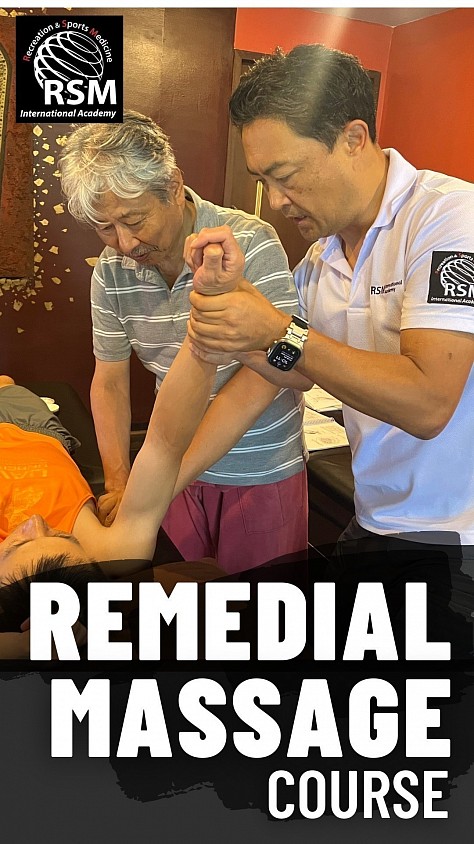
Remedial Massage Course
Remedial Massage Course: Musculoskeletal Assessment and Practical Application
RSM’s Remedial Massage Course develops assessment-led soft-tissue practice for professional practitioners. Hironori Ikeda, M.Sc. Sports Medicine (RSM International Academy), guides students in comparing muscle, fascial and joint findings with activity history, selecting a focused technique and reassessing the same task. A posture finding or tender point alone does not establish nerve entrapment or identify the sole cause of symptoms.
This afternoon module is taken during the same week as Deep Tissue Massage (DTM): Monday–Friday, 15:10–16:10, five hours in total for THB 6,000. DTM plus the module comprises 25 teaching hours for THB 18,000. Teaching, materials and questions and answers are in English. Check the DTM and module entry requirements before applying.
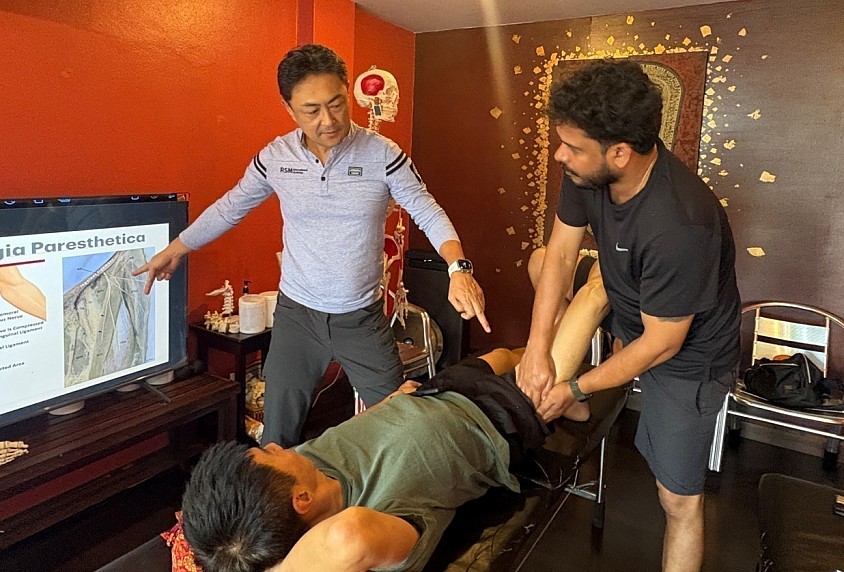
Remedial massage practice
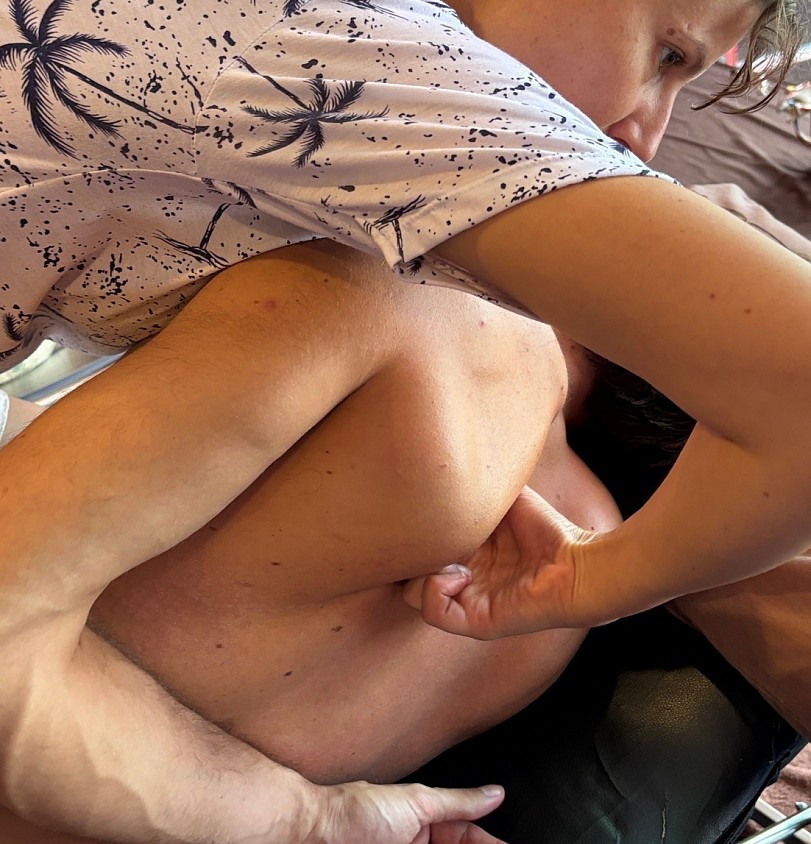
Clinical palpation practice
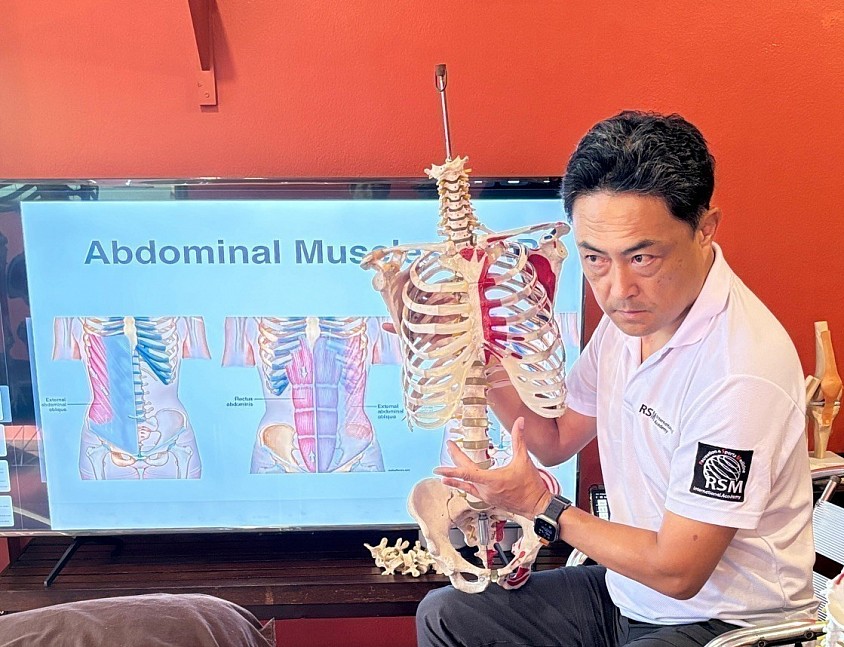
Functional anatomy training
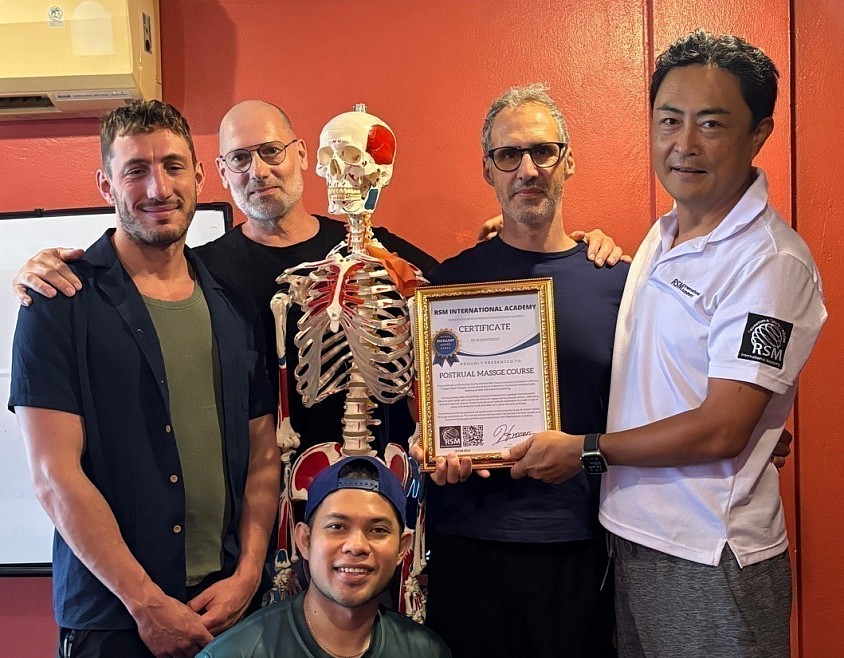
Remedial massage trainees
Course Fee & Timetable
Remedial Massage follows the Deep Tissue Massage course during the same teaching week. It develops assessment-led treatment selection, load adjustment and a matched re-test through supervised practical work.
Monday–Friday, 15:10–16:10: five hours of Remedial Massage at THB 6,000. Deep Tissue Massage is 20 hours at THB 12,000. The combined programme totals 25 teaching hours at THB 18,000.
DTM normally requires TPT. Applicants with university or vocational education in healthcare, rehabilitation or massage may request an individual entry review. The paired option retains that prerequisite. View course dates and confirm eligibility and places. Teaching and questions are in English.
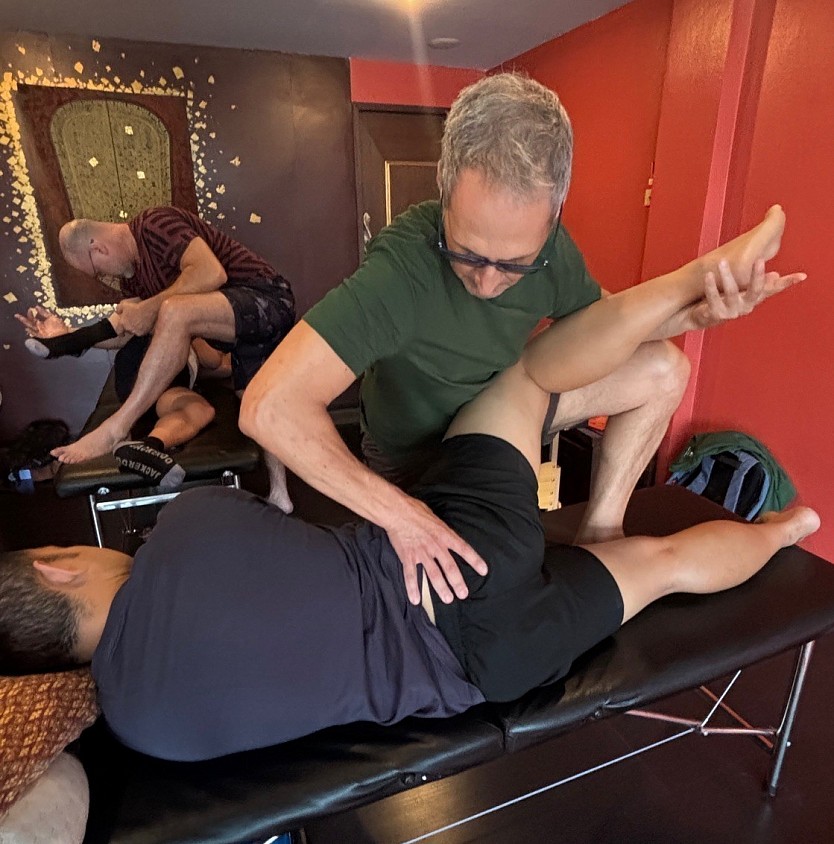
Massage practice at RSM
Remedial Massage Course: Case-Based Assessment and Practical Reasoning
Practical Case Studies for Massage Therapists
Case-based practice compares posture, movement, range of motion, muscle function and palpation findings. Students consider possible muscle and skeletal contributors, including pelvic anteversion or retroversion, and discuss functional tests such as FAIR and FADIR as part of a broader assessment. No single test, posture finding or tender point establishes a diagnosis. Students form a working hypothesis, select an appropriate soft-tissue technique, adjust contact and load, and reassess the same task.
🔸 Supervised hands-on practice reinforces palpation, technique selection, pressure and load control, and reassessment with direct instructor feedback.
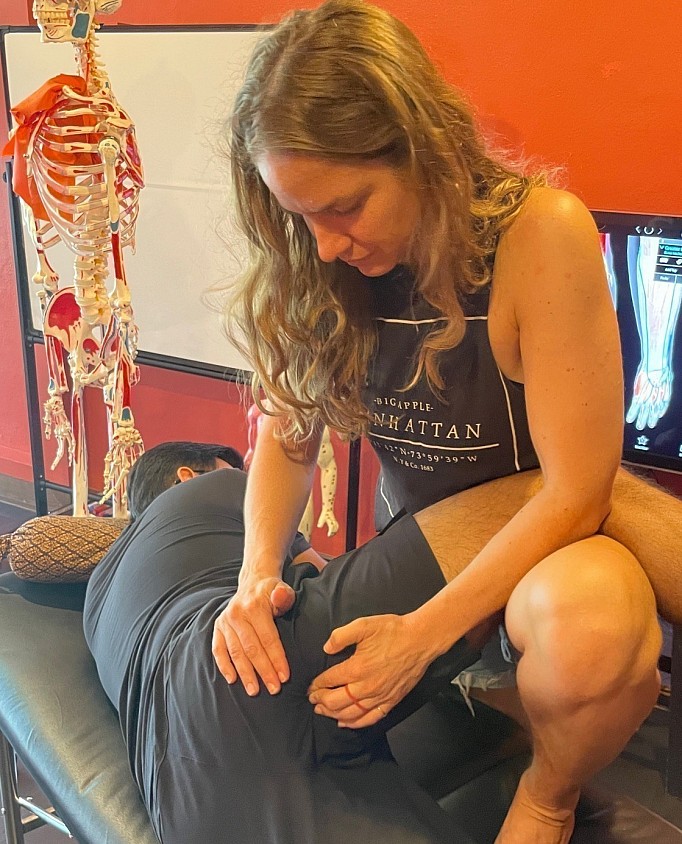
Lower leg massage practice
Hip, Pelvis and Lower-Back Assessment for Sciatic Symptoms
This case example examines sciatic-pattern symptoms through hip, pelvic and lumbar movement, range of motion, muscle function, symptom distribution and palpation findings. Students compare possible contributors and form a working hypothesis within their scope. They select an appropriate manual technique from the assessed findings, adjust contact and load, and reassess the same movement task.
◆ Supervised practical work develops clinical reasoning and careful technique selection; the course does not train students to diagnose medical conditions or promise a specific outcome.
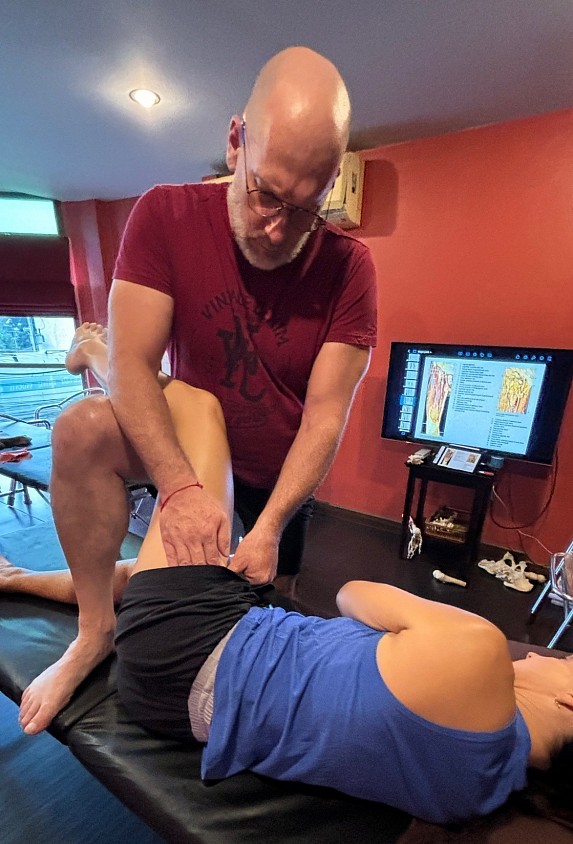
Thigh massage practice
Hip and Groin Assessment: Pelvic Position, FABER and FADIR Tests
This case module compares pelvic position with hip and groin movement, range of motion, muscle function and palpation. Anteversion or retroversion may be considered alongside other findings; pelvic position alone does not show what causes symptoms. Students use functional tests such as FAIR and FADIR only as part of broader assessment, form a working hypothesis, choose a manual technique within course scope and reassess the same task.
◆ Practical work focuses on comparing findings and selecting an appropriate technique; it does not train students to diagnose nerve entrapment or promise pain relief.
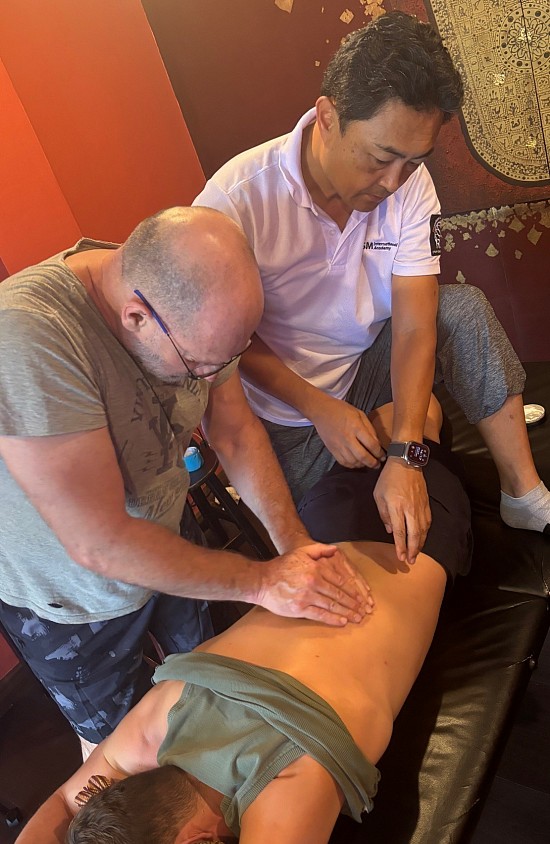
Lower back massage practice
Lumbar Movement, Muscle Function and Soft-Tissue Assessment
Lumbar Movement, Muscle Function and Reassessment
Students compare lumbar and hip movement, range of motion, muscle function and palpation findings. Depending on the course curriculum, practical work may include direct stretching, cross-fiber strokes and Active Soft Tissue Release (ASTR). They adjust contact, direction and load to the observed response, then reassess the same task. Posture or tenderness alone does not identify the cause of low-back pain or establish nerve involvement. Outcomes vary; the course does not guarantee pain relief or postural correction.
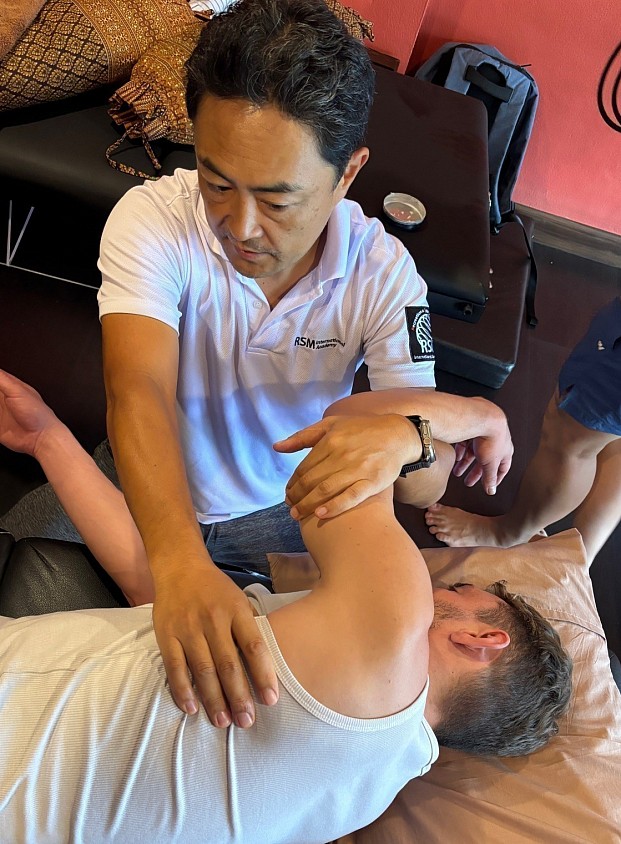
Shoulder mobility practice
Thoracic, Rib and Scapular Mobility Assessment
Movement Findings and Technique Selection
Students compare thoracic, rib, shoulder and scapular movement, range of motion, muscle function and palpation findings. Kyphotic posture or reduced mobility alone does not establish nerve compression or explain symptoms. Functional tests contribute to a working hypothesis. Students select and adapt the manual techniques taught in the course, adjust contact and load to the response, and reassess the same task. Supervised practice develops assessment and technique-selection skills; the course does not diagnose conditions or guarantee symptom relief.
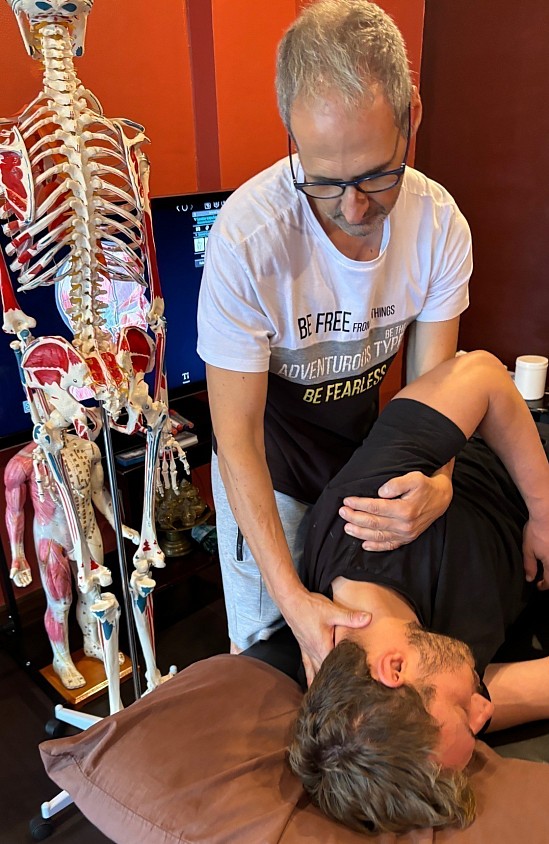
Shoulder and neck palpation
Cervical, Shoulder and Scapular Movement Assessment
Functional Findings and Practical Reassessment
Students compare cervical, shoulder and scapular movement, range of motion, muscle function and palpation findings. Forward-head posture or neck discomfort alone does not establish nerve compression or its cause. Students discuss relevant findings, select manual techniques included in the course and reassess the same task, adjusting contact and load to the response.
Supervised practice develops careful assessment, load control and technique selection. The course does not train students to diagnose nerve entrapments or guarantee pain relief or posture change.
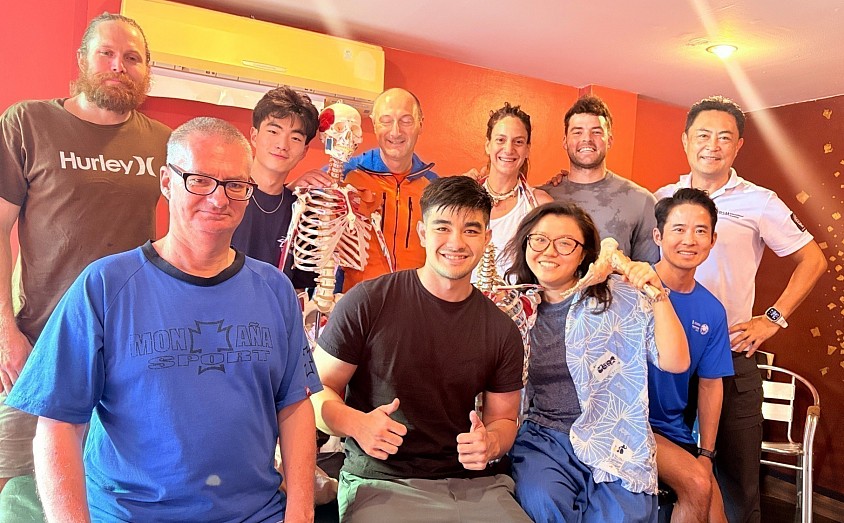
Massage course trainees
Applying Remedial Massage in your work
The Remedial Massage Course develops practical skills in musculoskeletal assessment, assessment-led soft-tissue technique selection, pressure and load control, and reassessment. Use these skills within your existing professional scope and explain how your findings inform your choice of technique.
RSM Remedial Massage | Use muscle, fascial and joint findings to develop case-based clinical reasoning
People with apparently similar symptoms or movement restrictions may present different findings that deserve attention. Remedial Massage develops the ability to consider muscles, fascia, movement around joints, and the person's daily or sporting activities together, then set priorities for an individual session.
At RSM, DTM palpation and practical techniques are applied to case discussions involving the hip–pelvis–lumbar region, thorax and shoulder girdle, and neck. You compare muscle tension, tenderness, fascial glide, muscle function, joint range of motion and the movement associated with symptoms to decide which findings need further investigation.
Considering soft-tissue restriction alongside structures around the joint, including the joint capsule, broadens your basis for selecting a technique. History and several assessment findings help you form a working hypothesis, choose suitable soft-tissue contact or joint movement, repeat the same task and use the response to plan the next step.
You do not need to arrive with a complete framework for organising every case or explaining every relationship between findings. The central learning process is to describe the order of your assessment and the purpose of a technique, then develop those decisions through practice and feedback.
Hironori Ikeda, M.Sc. Sports Medicine (RSM International Academy), connects clinical and teaching experience with understanding of muscles, fascia and tissues around joints developed through cadaver anatomy study. Photographs and anatomical references provide practical clues for deciding what to assess and which contact to select within a case.
In small-group practice, he directly reviews your findings, the reason for the selected technique, contact surface, direction, pressure and support. You also practise reconsidering a working explanation from the person's response, rather than quickly attributing all findings to a single cause.
Comparing findings and explaining your treatment plan are skills that change how specifically you can respond to each client. Applying existing hands-on techniques more precisely to an individual situation develops the value and professional depth of your work.
Remedial Massage: apply DTM through case-based assessment and practical reasoning
Remedial Massage is the applied afternoon course during the DTM week. It uses TPT clinical palpation and muscle-function assessment as a foundation for applying DTM contact and pressure control to an individual case. Muscle and fascial findings are compared with movement around joints and the person's daily activities to decide what to assess further and which technique to select.
Case discussions may consider thoracic outlet syndrome, sciatic symptoms, meralgia paresthetica, symptoms in the dorsal scapular nerve region and double-crush presentations. History, symptom distribution, range of motion, muscle function, movement response and palpation findings help form a working hypothesis about muscle and joint involvement and the mechanical sensitivity of neural tissues.
Practical work uses that hypothesis to select the target area, soft-tissue contact or suitable joint movement and adjust pressure, direction, support and load. You repeat the same movement task and practise explaining what should continue and what needs reconsideration. Existing techniques are applied to individual findings rather than a fixed routine for a symptom label.
This is education in assessment and practical skills. It does not confer diagnostic authority or guarantee a solution to neural compression or complex symptoms. Application follows indications, contraindications and your professional scope; progressive sensory changes, weakness or other findings requiring specialist assessment call for withholding the technique and considering medical referral.
