Italy 2027 | Dynamic Postural Assessment, Spinal Biomechanics & Manual Therapy | Piove di Sacco, Padova | April
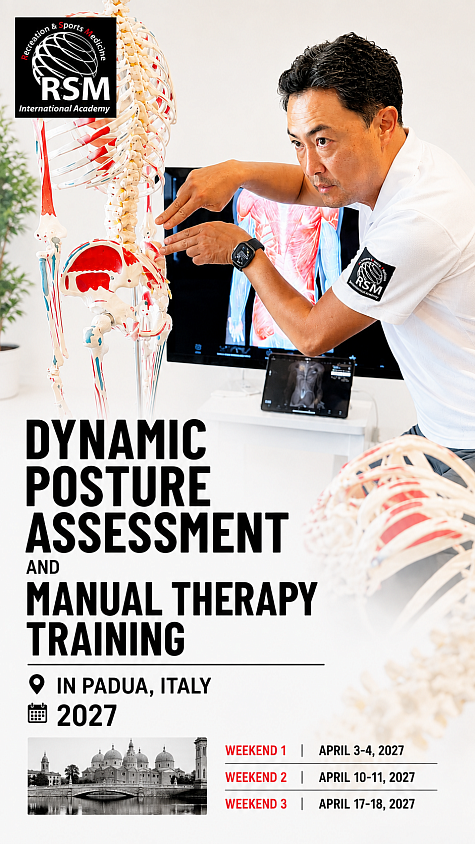
Dynamic Posture Assessment and Manual Therapy Training in Padua, Italy
Intensive Dynamic Posture Assessment, Kinetic Chain & Manual Therapy Course in Padua, Italy
RSM International Academy will conduct a special three-weekend intensive training program in Padua, Italy, in April 2027, focused on Dynamic Posture Assessment, Spine Biomechanics, Breathing Mechanics, Kinetic Chain Analysis and Manual Therapy.
Using detailed functional anatomy and the Twist Disc, participants will study how individual spinal segments, breathing patterns and body alignment influence posture and movement. The course develops practical skills in assessing ascending and descending kinetic chains, identifying movement compensations, and understanding how changes in one region can affect the whole body.
Participants will also learn manual therapy and stretching approaches designed to improve spinal mobility and movement quality. This intensive program is suitable for physiotherapists, sports therapists, massage therapists, sports trainers, yoga instructors and Pilates instructors who want to deepen their understanding of human movement and apply it directly to assessment and treatment.
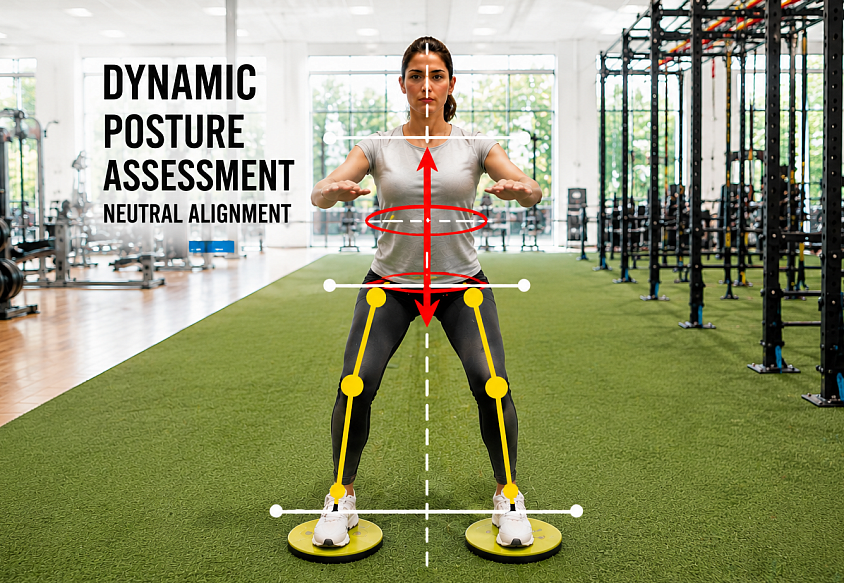
Dynamic Posture Assessment with Twist Disk
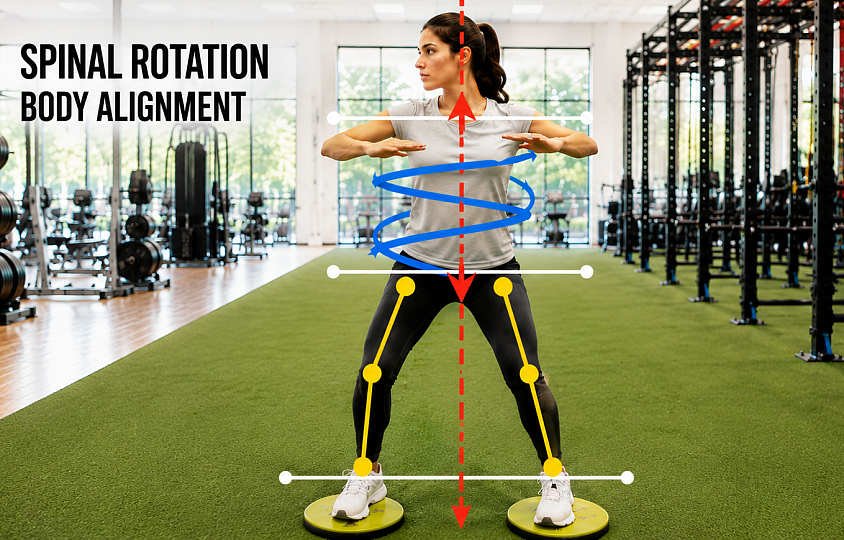
Kinetic Chain Assessment
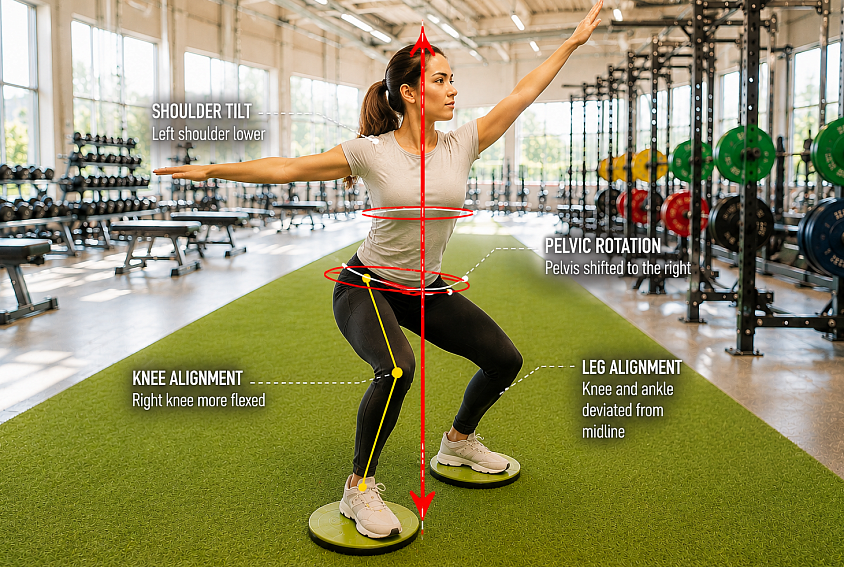
Analyze Movement Patterns Causing Pain
Practical Dynamic Posture Assessment with the Twist Disc
This course is not based on theory alone. Using the Twist Disc, participants perform and record their own movements on video, then analyze how body alignment, spinal movement and dynamic core activation change during rotation, balance and weight transfer. Particular attention is given to how activation around the body’s center supports spinal alignment and dynamic postural stability during movement.
Video analysis is then used to examine how movement of the upper limbs, shoulders, pelvis and lower limbs influences individual spinal segments through the kinetic chain. By comparing actual movement with functional anatomy, participants develop a practical understanding of ascending and descending kinetic chains, movement habits and compensatory patterns, and learn how these findings can be applied to movement correction and manual therapy.
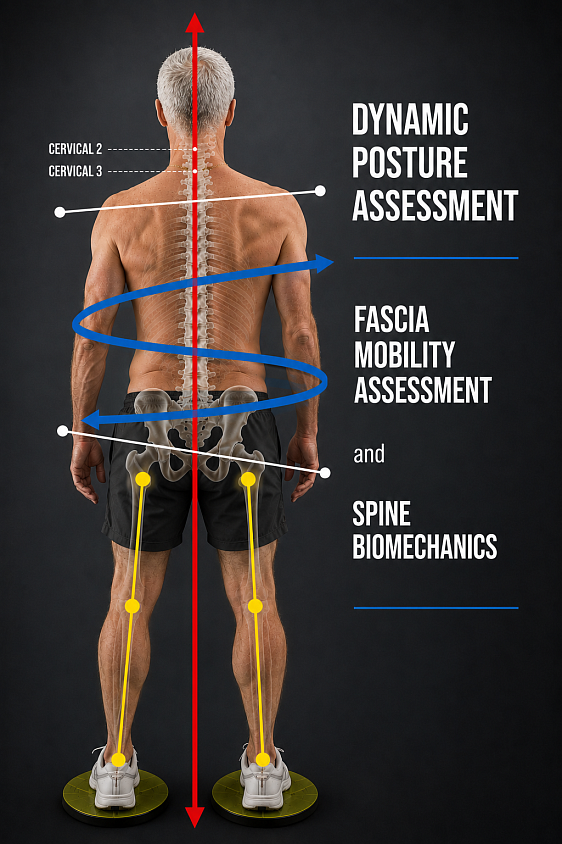
Spine Biomechanics
Understanding Spinal Mobility to Improve Posture Assessment and Manual Therapy
Many sports trainers, massage therapists, Pilates instructors, yoga instructors and other therapists work with posture and movement every day, but often without a deep understanding of spinal mobility, breathing mechanics and how individual spinal segments influence the kinetic chain. Understanding these relationships is essential for more accurate posture assessment and movement analysis.
Each training day uses approximately 300 anatomical photographs, clinical images and practical movement examples to connect functional anatomy with real human movement. This deeper understanding can be applied to posture improvement, dynamic postural stability, stretching, movement correction and more individualized manual therapy.

Hironori Ikeda - RSM International Academy
Course Information - Schedule & price
Location: Padua, Italy
Format: 3 Weekends / 6 Training Days
Time: 10:30–13:00 / 14:00–16:30
Training: 5 hours per day
◆ Weekend 1 / April 3–4, 2027
Spine Mobility, Breathing Mechanics & Dynamic Posture Assessment
◆ Weekend 2 / April 10–11, 2027
Hip–Pelvis–Lumbar Kinetic Chain, Functional Anatomy & Manual Therapy
◆ Weekend 3 / April 17–18, 2027
Thoracic Mobility, Breathing Mechanics, Cervical Assessment & Manual Therapy
Course Fees
Standard Registration
Course Fee: €250 per weekend
IInsurance: €20 (one-time payment, valid for 1 year)
Total: €270 per weekend
Early Bird – Until January 31, 2027
Course Fee: €230 per weekend
Insurance: €20 per weekend
Total: €250 per weekend
Insurance: €20 (one-time payment, valid for 1 year)
3-Weekend Early Bird Package
For participants registering for all 3 weekends by January 31, 2027:
Course Fee: €690+€20 Insurance
Insurance: €20 (one-time payment, valid for 1 year)
Total Package Price: €710
From February 1, 2027, the Early Bird offer will end and all registrations will be charged at the standard price.
Registration & Payment
A €50 deposit per weekend is required to secure your place.
For the complete 3-weekend programme, the total deposit is €150.
Deposits must be paid via Wise.
Remaining Course Fee: Cash payment on the training day.
Wise Payment Information:
[RSM International Academy – Wise Payment Information Link]
Cancellation & Refund Policy
- If you are unable to attend the course, please notify us at least 7 days before your scheduled training date.
- Cancellations made at least 7 days in advance are eligible for a refund.
- Cancellations made less than 7 days before the training date are non-refundable.
Important Notice
-
Weekend 1 is mandatory before participating in Weekend 2 or Weekend 3.
-
Participation in all 3 weekends is strongly recommended, as the programme is designed as a progressive training sequence.
-
Early Bird registration closes on January 31, 2027.
-
From February 1, 2027, standard fees apply.
-
Recommended accommodation options in Padua will be announced once final arrangements are confirmed.
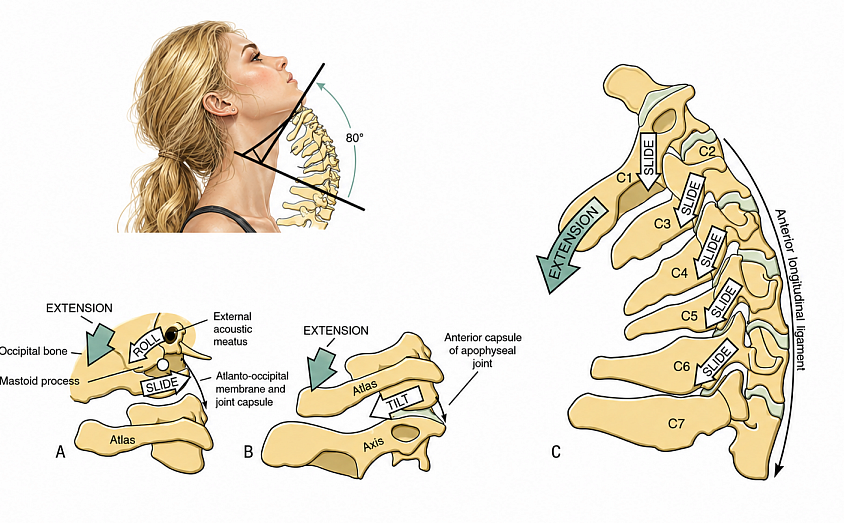
leaning Spine Biomechanics
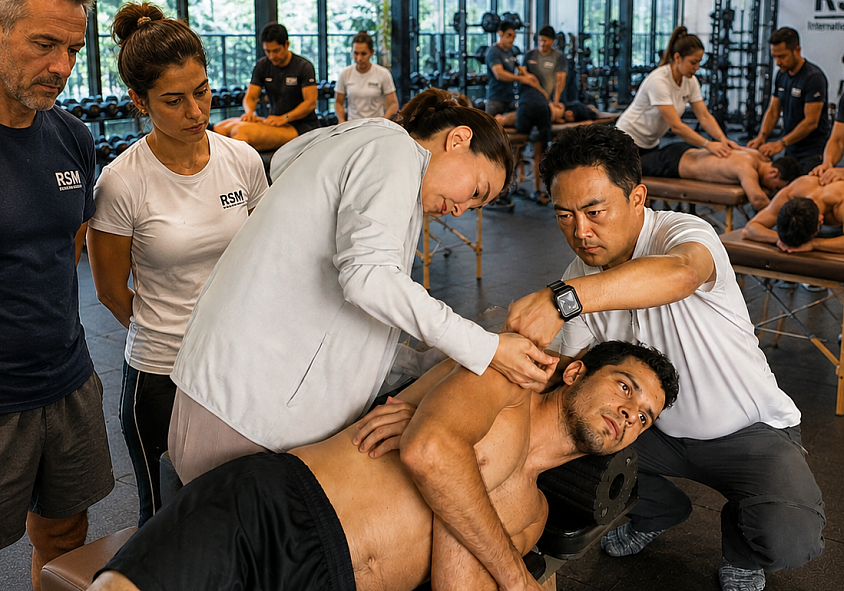
Manual Therapy Hands-On Training
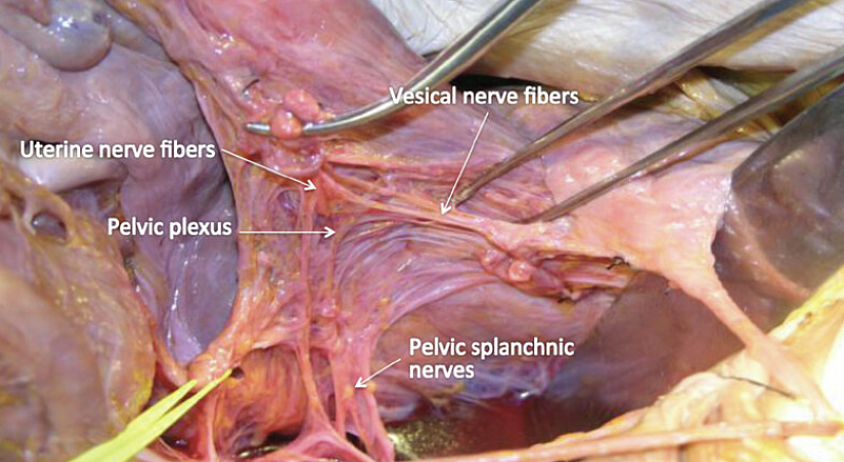
Cadaver Anatomy Phots for Visualized Learning
Spine Mobility, Breathing Mechanics & Dynamic Posture Assessment - 1st Weekend April 2027
The first weekend builds the foundation for the entire program. Participants will study spine biomechanics, spinal mobility, breathing mechanics and Dynamic Posture Assessment, and connect these concepts with functional anatomy, palpation and practical kinetic chain assessment.
Training is strongly practical. Participants will record and analyze their own movement, work through detailed case studies, and examine selected movement patterns from athletes to understand how spinal segments, the pelvis, hips, shoulders and limbs interact during real movement. By combining video analysis with functional anatomy, participants will develop a deeper ability to recognize movement habits, compensatory patterns and individual differences in the kinetic chain.
The weekend is designed to develop advanced assessment skills that can be applied directly to professional practice. Participants will learn how movement findings can guide sports training, posture improvement, corrective movement, stretching and manual therapy, allowing a more individualized approach for each client or athlete.
Spine Biomechanics, Palpation & Twist Disc Dynamic Posture Assessment - 1st Day (Saturday)
The morning begins with approximately 2.5 hours of focused training in functional anatomy and spine biomechanics. Participants will study how cervical, thoracic and lumbar facet joints influence segmental movement, together with the relationship between hip movement, pelvic motion and the spine. Particular attention is given to how hip flexion, extension and rotation can alter pelvic positioning and change the movement demands placed on the lumbar spine.
Participants will also study segmental spinal palpation, learning how to identify individual spinal levels and relate what they feel manually to what they observe during movement. Breathing mechanics are connected to thoracic mobility, rib movement, costovertebral mechanics and thoracic demifacets, with practical assessment of how different breathing patterns influence spinal position and movement.
In the afternoon, participants use the Twist Disc and video recording to assess body alignment and kinetic chain behavior. The analysis considers whether a movement pattern may be related to habitual movement, joint mobility restriction, increased muscle tone, altered myofascial mobility or compensation elsewhere in the kinetic chain. Case studies and selected athletic movement examples are also used, followed by corrective movement strategies and re-assessment.
Advanced Dynamic Posture Assessment, Case Studies & Manual Therapy - 2nd Day (Sunday)
Sunday develops the assessment process at a more advanced level. Using video-based movement analysis, participant case studies and selected athlete movement examples, students learn to examine movement patterns in greater detail and distinguish between mobility restriction, habitual movement and compensatory strategies within the kinetic chain.
Functional anatomy, palpation and manual assessment are then used to investigate these findings more precisely. Participants study how repeated mechanical stress, altered joint movement, increased muscle tone, trigger points and changes in fascial mobility may influence movement, and how this information can be translated into more individualized manual therapy, stretching and training strategies.
The objective is to move beyond simply identifying an abnormal movement. Participants learn how to analyze it, explain it anatomically, assess it manually and apply that information directly to professional practice.
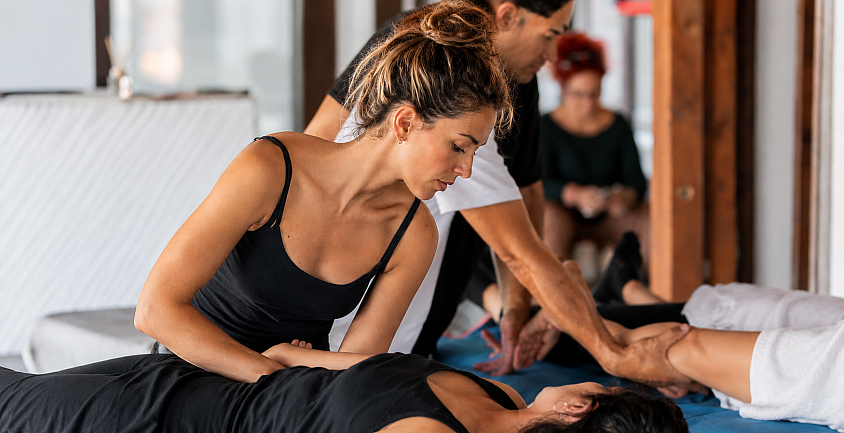
Sports Medicine Massage for Postural Stability
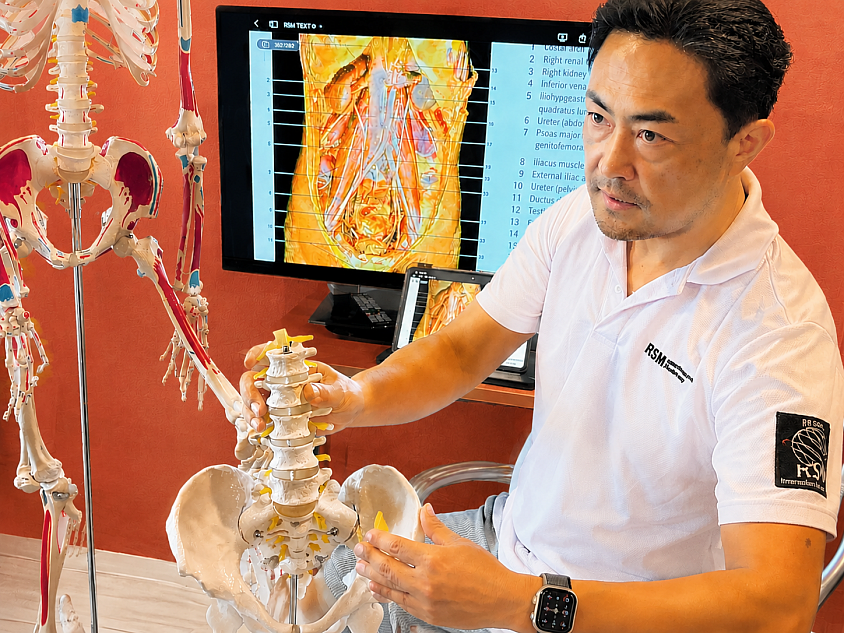
Advanced Spine Biomechanics & Palpation
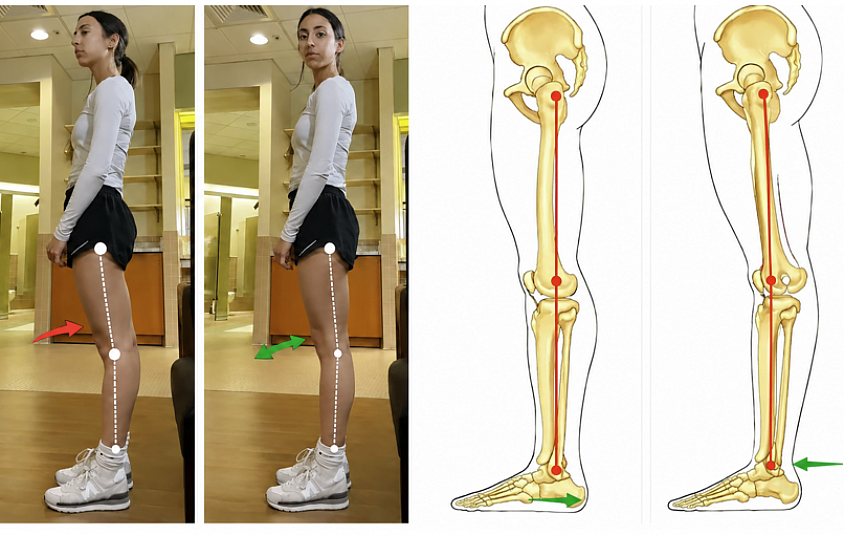
Postural Assessment and Manual Therapy
Hip-Pelvis-Lumbar Kinetic Chain, Functional Anatomy & Manual Therapy - 2nd Weekend April 2027
The second weekend focuses on the hip, pelvis and lumbar spine, with particular attention to how these regions interact through the kinetic chain. Participants will study how hip flexion, extension, internal and external rotation, abduction and adduction influence pelvic position, lumbar movement and overall body alignment.
The weekend also develops a deeper understanding of lumbopelvic rhythm, pelvic shift, anterior and posterior pelvic tilt, pelvic rotation, sacral nutation and counternutation, and segmental lumbar biomechanics. Functional anatomy, palpation and movement assessment are used throughout to understand how asymmetry or restriction in the hip and pelvis can alter lumbar movement and affect posture, pain and sports performance.
Functional Anatomy, Lumbar Biomechanics & Palpation of the Hip–Pelvis Complex - 3rd Day
Saturday begins with detailed study of the functional anatomy of the hip, pelvis and lumbar spine. Participants will examine the hip flexors, extensors, adductors, abductors and rotators, including how these muscle groups work together during pelvic rotation and weight transfer. Particular attention is given to rotational sports such as tennis, golf, skiing and basketball, where coordinated movement between the hip, pelvis and lumbar spine is essential for efficient force transfer.
Participants will also study lumbar segmental biomechanics and lumbopelvic coordination, including pelvic tilt, lateral pelvic shift, ASIS and PSIS movement, sacral nutation and counternutation, and the relationship between pelvic movement and individual lumbar segments. Palpation training is used extensively to identify the relevant muscles, bony landmarks and spinal levels, while functional anatomy and common injury patterns are discussed alongside the assessment.
The session also introduces important clinical relationships around the thoracolumbar junction, myofascial dysfunction and neural structures of the hip and lumbar region. Conditions such as meralgia paresthetica are used as examples to understand how local anatomy, neural irritation and movement patterns may interact, without assuming that every symptom is caused by a single structure.
Practical Manual Therapy, Stretching & Lumbopelvic Assessment - 4th Day
Sunday is primarily practical and focuses on applying the assessment findings from Day 1 to manual therapy, stretching and pain-related palpation. Participants will learn how to assess increased muscle tone, trigger points, fascial mobility and movement restriction around the hip, pelvis and lumbar spine, and how these findings can be connected with the kinetic chain observed during movement.
Practical training includes stretching, Trigger Point Therapy, Deep Tissue Massage and manual techniques designed to improve mobility and reduce excessive mechanical stress. Rather than applying the same techniques to every person, participants will use movement assessment, palpation and functional anatomy to select a more appropriate treatment strategy for the individual.
The movement patterns introduced during the first weekend remain an important reference point. Participants will compare what they observe during movement with what they find manually, then use that information to develop a more tailored massage and manual therapy skill set for the hip–pelvis–lumbar complex. The objective is to connect movement analysis, segmental lumbar assessment, palpation and hands-on treatment into one practical clinical reasoning process.
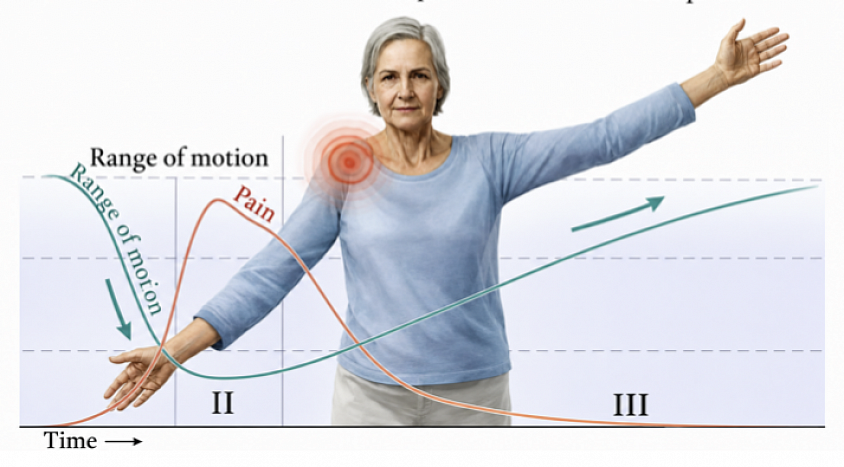
Advanced Joint Mobilization Techniques & Clinical Application
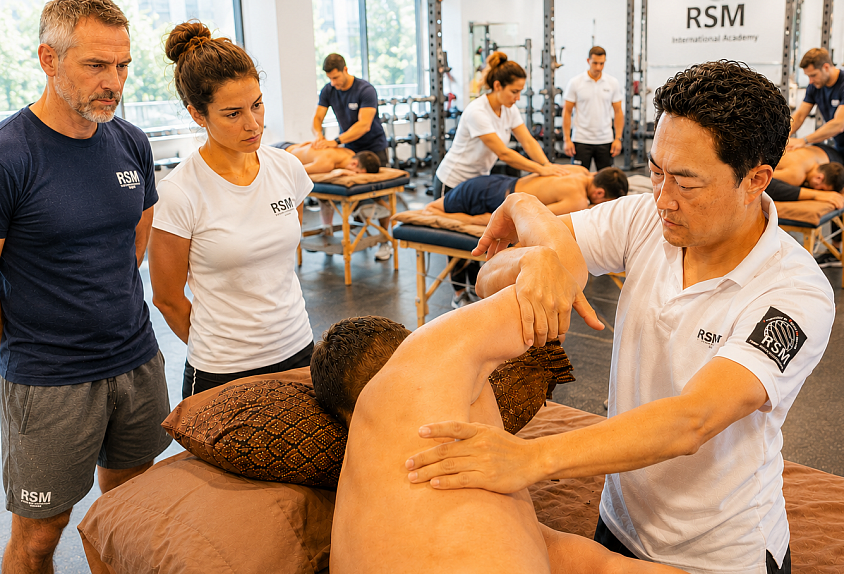
Advanced Hands-On Practical Massage Training
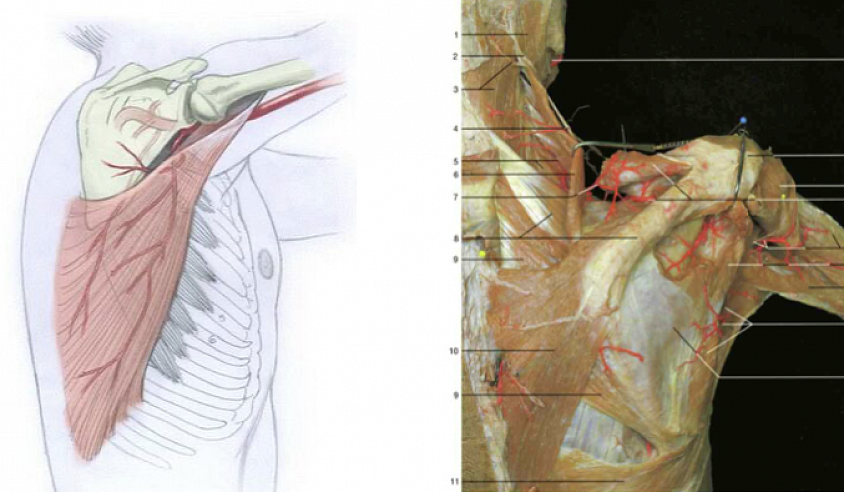
Deepen Understanding with Real Anatomy Photos
Thoracic Mobility, Breathing Mechanics, Cervical Assessment & Manual Therapy
The third weekend focuses on the thoracic spine, breathing mechanics, scapular movement and cervical spine, bringing together the assessment skills developed during the first two weekends. Participants will study how thoracic mobility and rib movement influence breathing, how the scapula interacts with the thorax, and how these changes can affect cervical movement, posture and sports performance.
Breathing assessment is developed in greater depth through Shallow Chest Breathing, Deep Chest Breathing, Abdominal Breathing and Diaphragmatic Breathing, including the relationship between thoracic movement, the diaphragm and the Zone of Apposition (ZOA). Video analysis from the first weekend is used again so participants can connect breathing patterns and thoracic mobility with actual movement, posture and the kinetic chain.
Thoracic Biomechanics, Breathing Assessment & Cervical-Scapular Kinetic Chain
Saturday begins with detailed functional anatomy and biomechanics of the thoracic spine, ribs, scapula and cervical spine. Participants will study thoracic facet and demifacet mechanics, rib movement during respiration, thoracic rotation and extension, and how changes in thoracic mobility influence scapular position, shoulder movement and cervical alignment.
Breathing mechanics are then assessed practically, including shallow and deep chest breathing, abdominal breathing, diaphragmatic breathing and ZOA-related mechanics. Participants will examine how different breathing patterns can alter rib-cage position, thoracic mobility and postural alignment, and how these changes may influence the shoulder and cervical spine through the kinetic chain.
The session also examines movement patterns seen in high-level athletes, particularly how the cervical spine and upper thorax contribute during rotation, acceleration and complex sporting movement. Postural patterns such as kyphotic posture and functional scoliosis are assessed together with thoracic mobility, scapular mechanics and breathing rather than being viewed only as static postural positions.
Cervical & Shoulder Assessment, Joint Mobilization and Advanced Manual Therapy
Sunday focuses on practical assessment and manual therapy for the thoracic spine, shoulder complex and cervical region. Using video-based movement findings, participants will learn to identify whether limitations in shoulder or cervical movement may be associated with thoracic restriction, altered scapular mechanics, breathing strategy, increased muscular tension or compensation elsewhere in the kinetic chain.
Palpation and manual assessment are then integrated with treatment. Participants will study approaches for neck and shoulder pain, increased muscular tension, trigger points and altered fascial mobility, together with joint mobilization techniques primarily using low-velocity approaches. Depending on the clinical context and participant level, selected higher-velocity mobilization concepts may also be introduced with appropriate attention to assessment, indications and safety.
The final stage of the weekend brings the entire three-week program together. Participants will use Dynamic Posture Assessment, functional anatomy, breathing assessment, kinetic chain analysis and manual findings to decide how manual therapy, mobility work and movement correction can be tailored more precisely to the individual client or athlete.
