Sports Massage Course
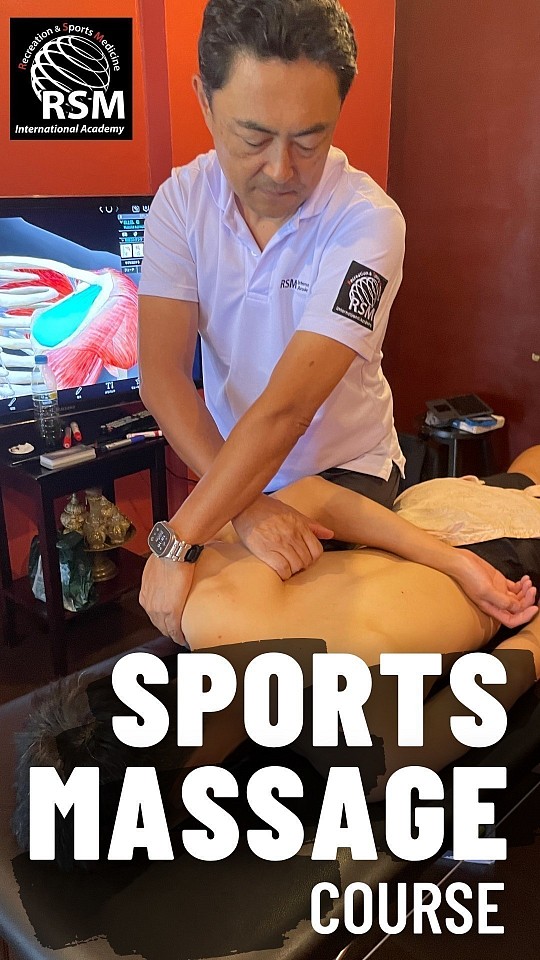
Sports Massage Course
Sports Massage for Performance, Pain Relief, and Injury Prevention
After completing the Trigger Point Therapy Course, participants can join RSM’s Sports Massage Course in Chiang Mai, Thailand. Focused on sports conditioning and performance, especially for running and repetitive-motion sports, the course combines pain management, recovery, and injury prevention.
By combining sports massage, proprioceptive activation, selected PNF stretching techniques, and kinetic-chain assessment, students learn practical methods to improve range of motion, movement quality, recovery, and athletic performance.
🔸 This course provides students with a 90-minute practical sports massage skill set, equipping them with essential tools for daily athlete conditioning and maintaining sports performance.
For case-based sports massage guidance, explore RSM’s Sports Medicine Insights blog on movement assessment, athletic recovery and injury prevention.
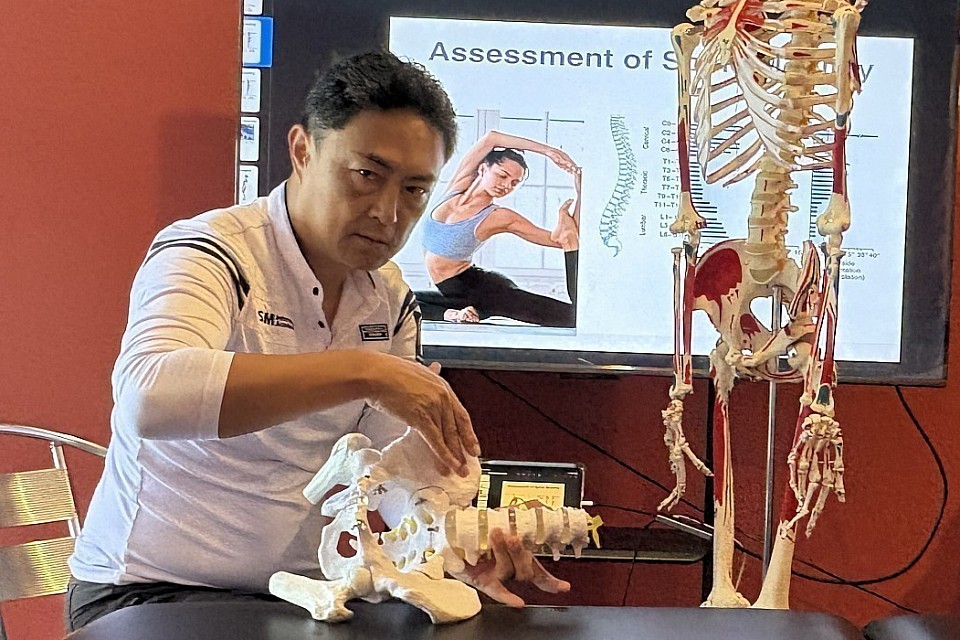
Sports Massage Integrating Kinetic Chain Assessment
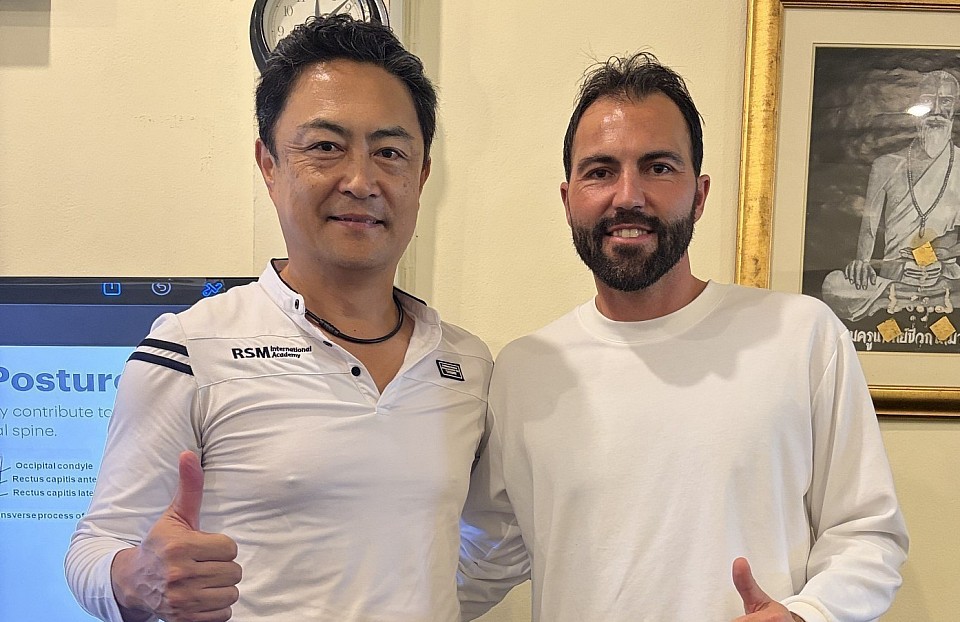
Dr. Simone Ripamonti | Physical Performance Trainer at Real Madrid FC (2009)
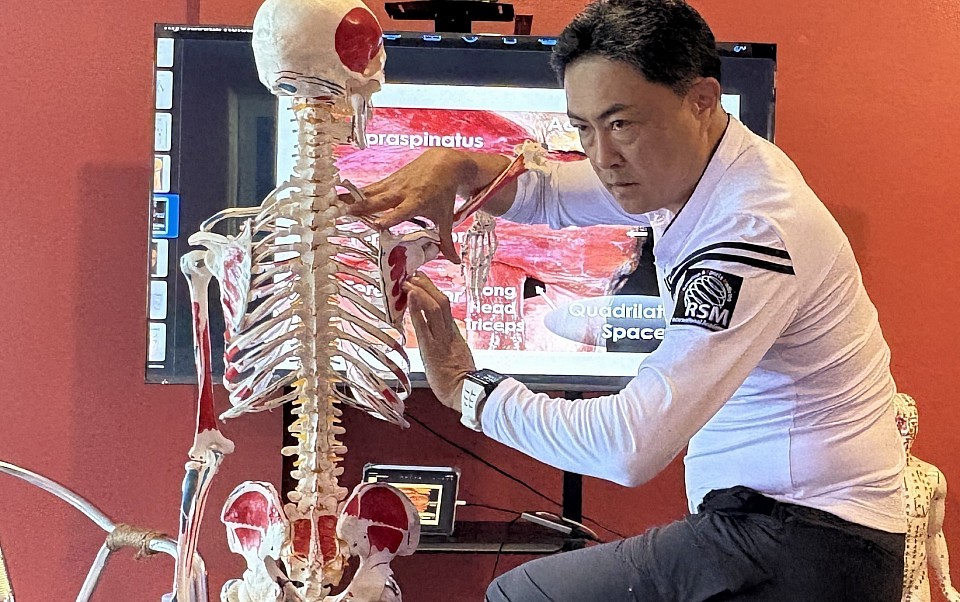
Clinical Sports Massage Integrating Three-Dimensional Biomechanics
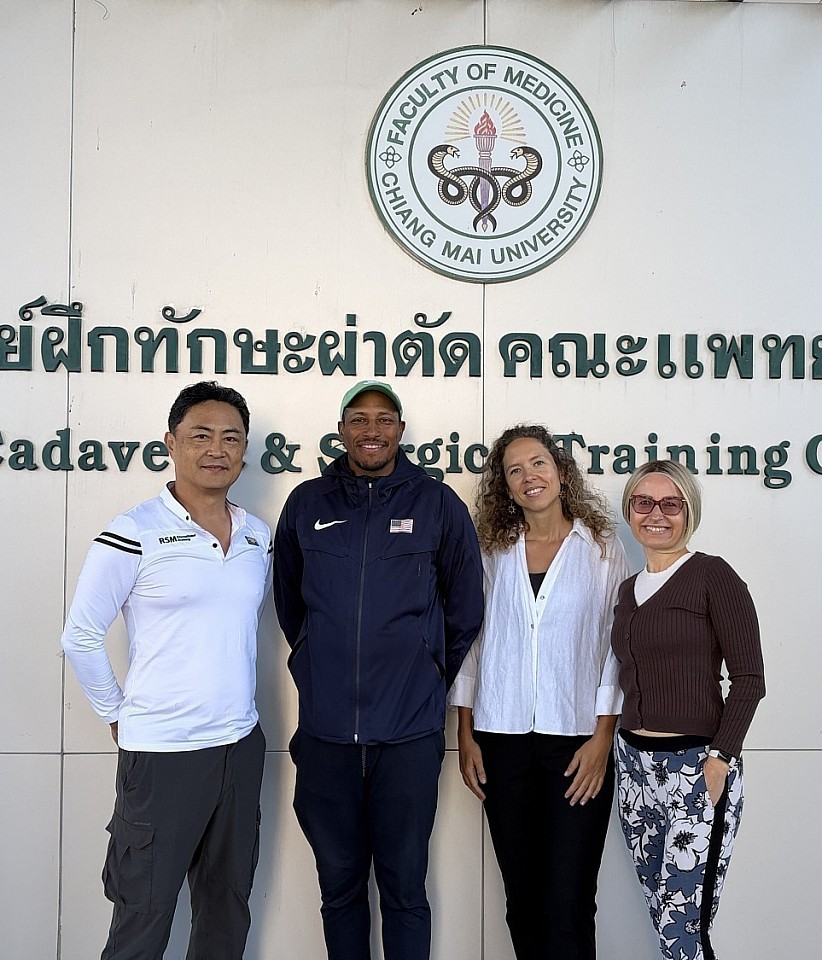
Sports massage course, Chiang Mai, Thailand
Course Schedule & Fee
This course equips you with essential skills for sports conditioning management, focusing on sports performance, recovery, mobility, pain reduction, and sports injury prevention.
🔸 Duration: Monday to Friday, 1 hour per day, immediately after the Trigger Point Therapy Course
Total: 5 hours
Sports Massage Course Fee: THB 6,000
Trigger Point Therapy + Sports Massage: THB 18,000
🔸 RSM’s Sports Massage Training is a specialized practical program for massage therapists, sports trainers, and professionals working with athletes.
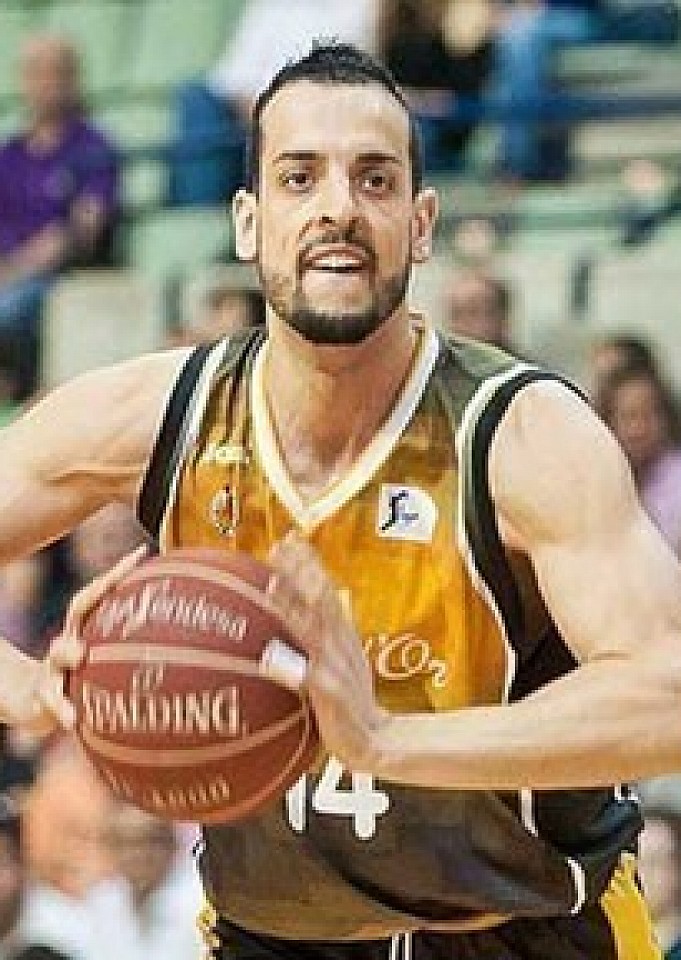
Spanish pro basketballer Salva Arco Received 7-Day Massage Treatment at RSM
Elite Athletes Turn to RSM Massage School for Top-tier Conditioning Management
Spanish professional basketball player Salva Arco Frías visited RSM during his off-season and received daily massage sessions targeting different areas of the body as part of his preparation for the upcoming season.
🔸 RSM combines professional sports massage with sports medicine, functional anatomy, and conditioning concepts, helping students understand how massage techniques can be adapted to individual athletes and different sporting demands.
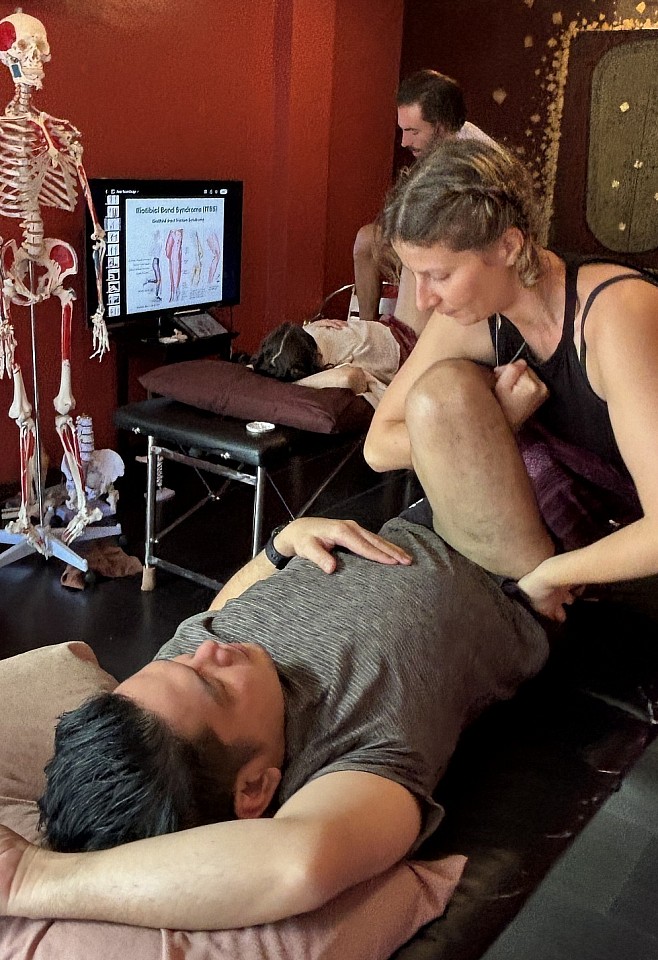
Sports massage and Clinical Assessment of Hip Joint Mobility
Stand Out with RSM’s Sports Massage Techniques for Performance and Conditioning
This course develops practical sports massage skills for performance, recovery, mobility, and injury prevention. Through proprioceptive activation and selected PNF stretching techniques, students learn how pain, restricted movement, and altered movement patterns can affect sports biomechanics and athletic performance.
🔸 You will learn techniques designed to improve movement efficiency, maintain functional athletic form, and support sports conditioning for sustained performance.
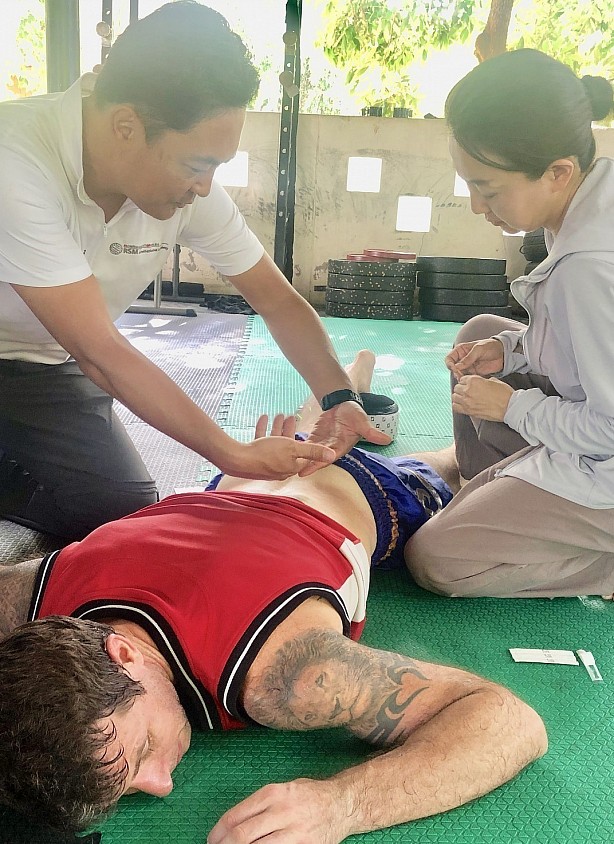
Kinetic Chain Assessment and Lower Back Pain
Optimizing Your Sports Massage with Kinetic-Chain Assessment
By understanding foot pronation, supination, and their effect on the ascending and descending kinetic chains, you will learn to apply Trigger Point Therapy more effectively within sports massage.
Kinetic-chain assessment helps students understand how movement through the feet, knees, hips, pelvis, and spine can influence muscle loading, mobility, movement efficiency, athletic performance, and injury risk.
🔸 You will also incorporate Deep Tissue Massage and Dynamic Myofascial Release techniques to expand your sports massage skill set and support mobility, recovery, and long-term sports conditioning.
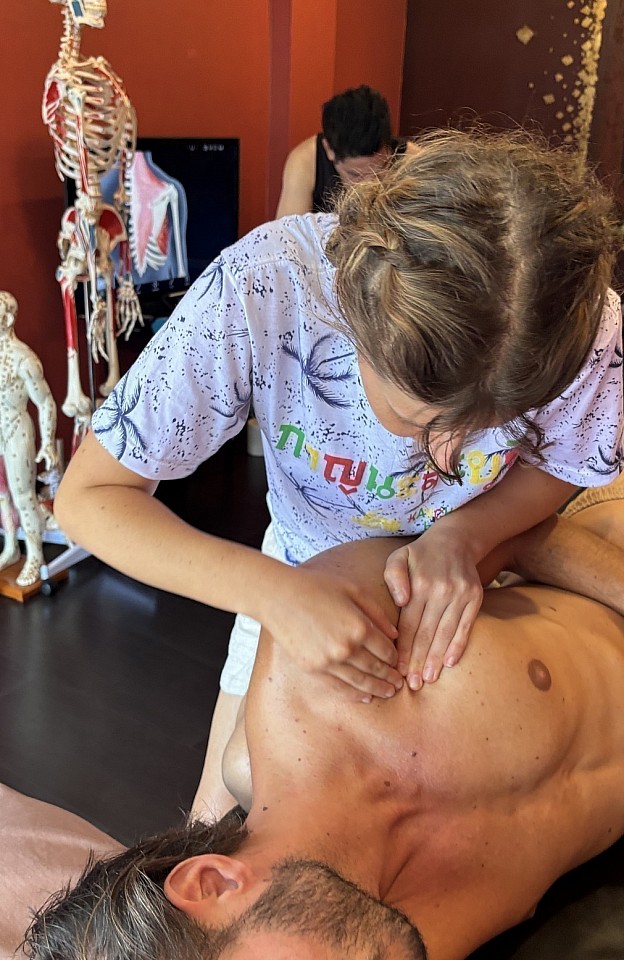
Understanding the causes of sports injury
Understanding Sports Injury Patterns: Advance Your Sports Massage Skills
By understanding common pain and movement patterns associated with sports injuries such as shin splints, plantar fasciitis, knee pain, hip discomfort, and sports-related lower back pain, students can apply sports massage more strategically.
The course also covers pelvic stabilization, rotator cuff imbalances, and the effects of foot pronation and supination on the kinetic chain.
🔸 This sports injury massage training develops a practical 90-minute skill set for athlete conditioning, movement assessment, recovery, performance, and injury prevention.
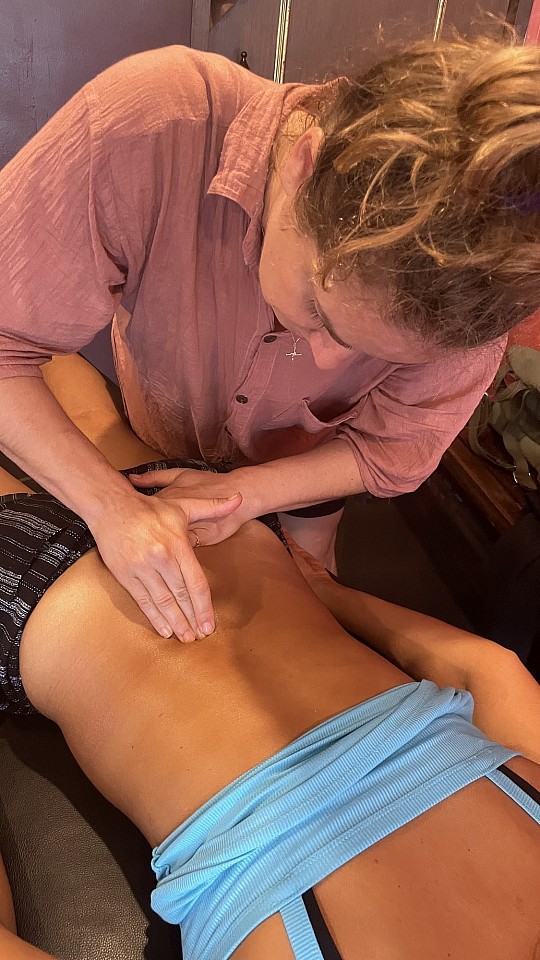
Injury prevention through advanced massage techniques
Trigger Point Therapy for Sports Performance and Recovery
Repetitive sports activity can increase muscle tension and activate latent trigger points, potentially affecting range of motion, movement quality, and athletic performance.
🔸 Students learn to identify relevant trigger points while considering the kinetic chain and dynamic postural alignment, integrating Trigger Point Therapy into sports massage to support mobility, recovery, sports conditioning, and injury prevention.
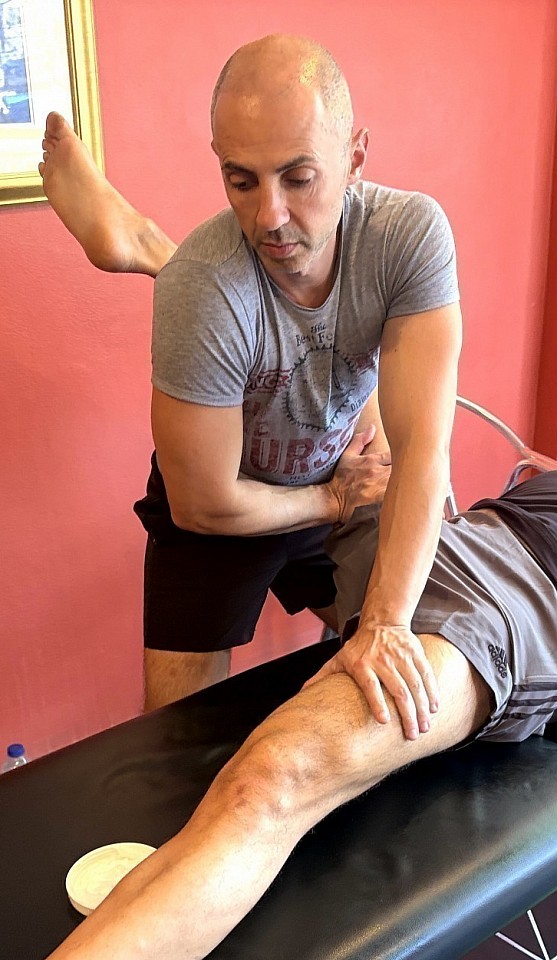
Sports massage improves muscle recovery and flexibility
Sports Biomechanics & Joint Mobilization for Athletic Movement
An understanding of sports biomechanics, joint alignment, and kinetic-chain movement is important for effective sports massage. Students learn to assess joint mobility and explore joint mobilization concepts, including HVLA and LVLA techniques where appropriate, together with joint play and functional movement assessment.
🔸 This section helps students understand how joint mobility, muscle tension, proprioceptive input, and kinetic-chain biomechanics interact when working to improve athletic movement, conditioning, recovery, and sports performance.
Why Is RSM’s Sports Massage Course Valuable for Sports and Performance Professionals?
RSM International Academy’s Sports Massage Course in Chiang Mai, Thailand is designed for massage therapists, physiotherapists, sports trainers, coaches, personal trainers, and other professionals who work with athletes, movement, recovery, and sports performance. It goes beyond a fixed massage routine by teaching students to interpret the athlete’s body through functional anatomy, kinetic-chain assessment, sports biomechanics, and practical conditioning concepts. Students combine sports massage, Trigger Point Therapy, proprioceptive activation, selected PNF stretching techniques, movement assessment, and sports-injury pattern recognition. The course examines how restrictions or altered movement in the feet, knees, hips, pelvis, spine, and upper body can influence the full kinetic chain and athletic performance. This gives practitioners a structured way to connect pain, mobility, recovery, conditioning, and injury-prevention decisions while staying within their professional scope.
How Does RSM Integrate Kinetic-Chain Assessment, Joint Mobilization, HVLA and LVLA into Sports Massage?
Kinetic-chain assessment is a central concept in RSM’s Sports Massage Course because sports performance depends on coordinated movement throughout the whole body—not only the area where an athlete feels pain or tightness.
Students learn to observe foot pronation and supination, pelvic stability, joint mobility, muscle tension, range of motion, and movement compensation through the feet, knees, hips, pelvis, spine, and upper body. This helps them understand how one restriction can influence loading and movement elsewhere in the kinetic chain.
RSM also introduces joint mobilization, joint play, joint centration, and HVLA (High-Velocity, Low-Amplitude) and LVLA (Low-Velocity, Low-Amplitude) techniques where appropriate, together with Trigger Point Therapy and sports massage techniques.
🔸 Students then reassess movement and adapt their approach rather than simply treating the painful area. This develops a more complete sports massage skill set for athletic conditioning, sports performance, mobility, recovery, injury prevention, and rehabilitation-oriented support.
