Trigger Point Therapy Course
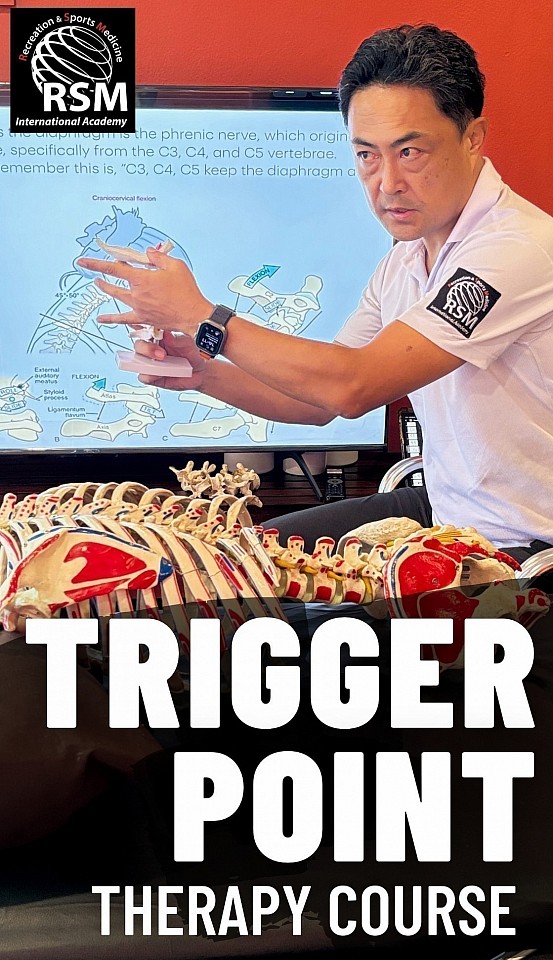
Trigger Point Therapy Course in Chiang Mai, Thailand
Relieve Chronic Pain by Learning Trigger Point Therapy with RSM
Learn to address walking-related pain and essential daily movements with RSM’s Trigger Point Therapy Course in Chiang Mai, Thailand.
This hands-on trigger point massage course integrates clinical palpation, functional anatomy, and sports medicine principles, helping you develop professional massage skills tailored to each client’s needs for pain relief and improved range of motion.
🔸 Endorsed by Dr. Amrita (MD, U.K.) and Philippa (PT, U.K.), this course is trusted in hospitals, spas, and rehabilitation centers. Gain authentic massage expertise backed by real client feedback, as evidenced by our Google Reviews.
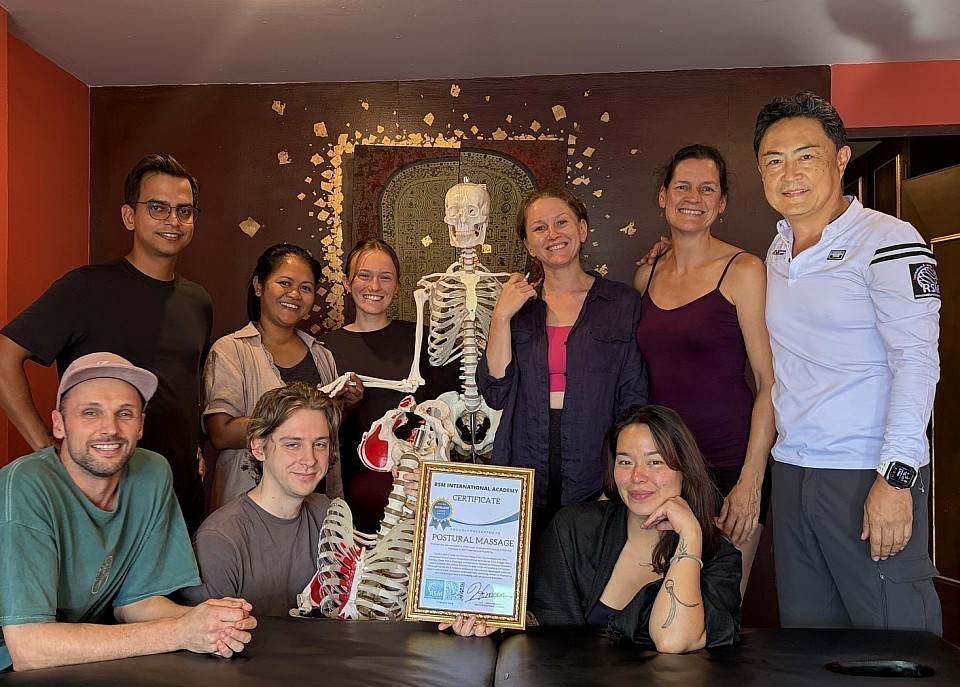
Netherlands National Team Therapist Trained at RSM
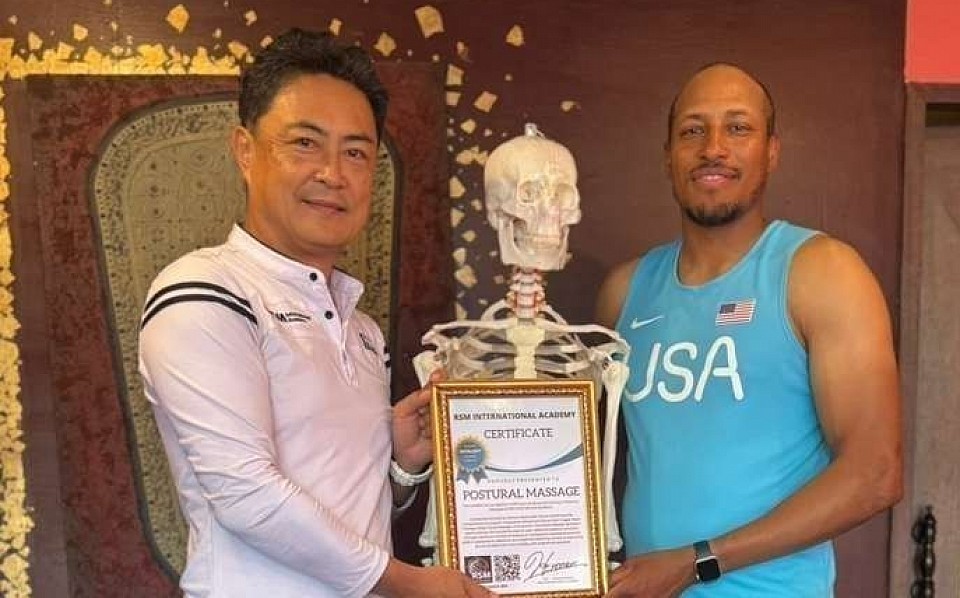
USA Paralympic National Team Coach Trained at RSM
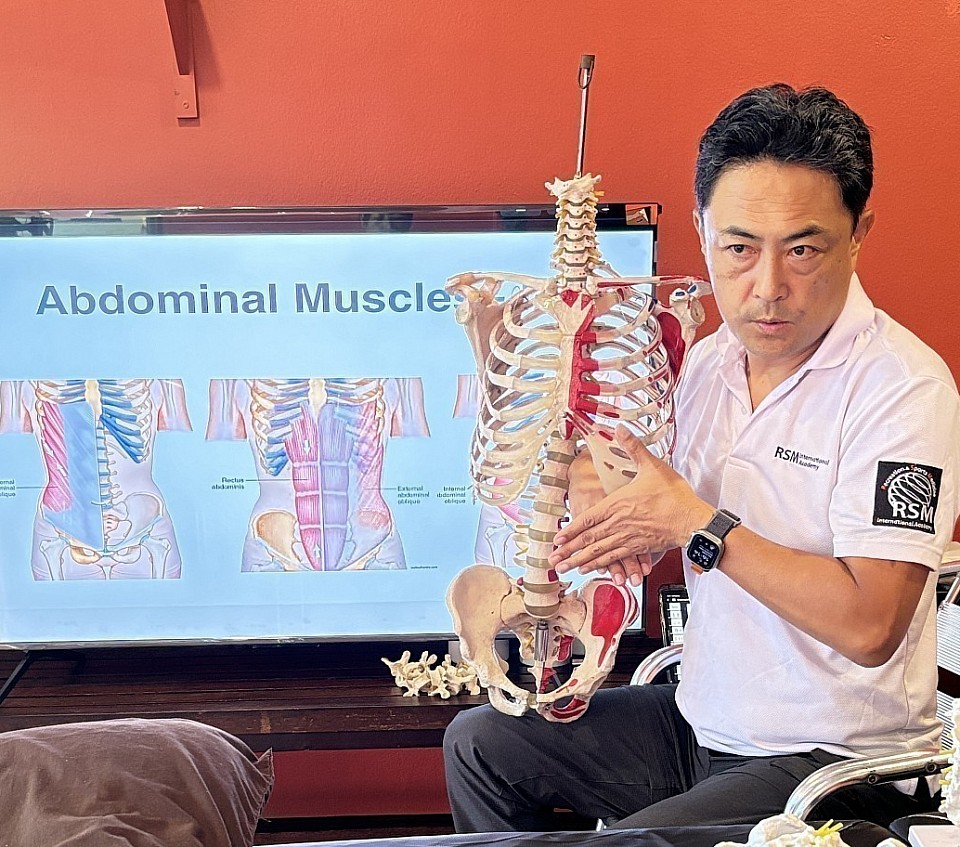
Functional Anatomy for Sports Massage
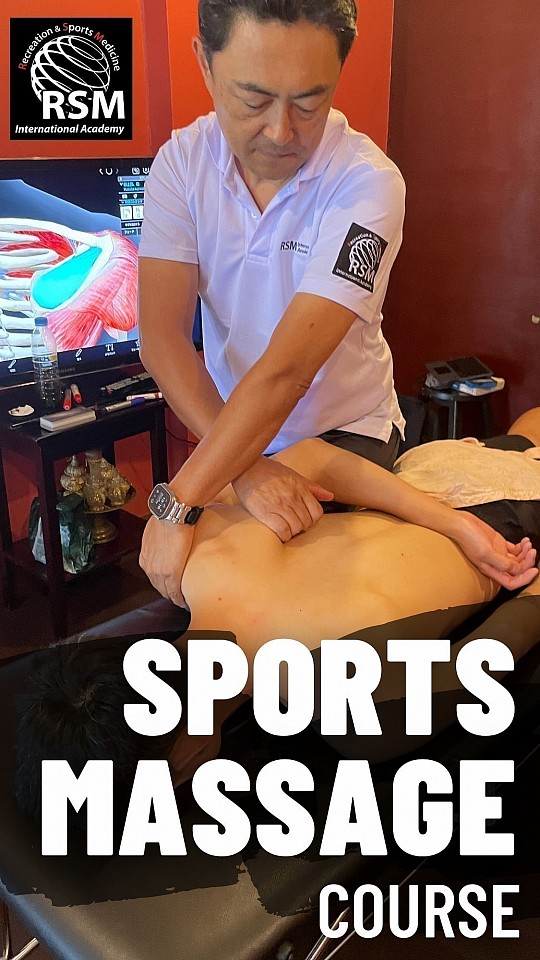
Sport Massage Course
Trigger Point Therapy Course Timetable & Fee
🔸 Course Fee - THB 12,000
(approx. EUR 326 / USD 381)
• 5 Days Intensive Course
• The course starts on Monday at 10:00
• Duration: 20 hours
(18 hours + 2 hours of Review)
🔸 Lessons & massage training
10:00-12:00 / 13:00-15:00 from Mon to Fri
Lunch break / 12:00-13:00 from Mon to Fri
🔸 The Trigger Point Therapy Course lasts 5 days, and is followed by the Sports Massage Course at 3:15 PM each day. This advanced course builds on your trigger point expertise, integrating it with sports massage techniques to provide specialized skills in a short timeframe.
🔸 Suitable for both beginners and advanced practitioners, this course develops the essential palpation and assessment skills needed to progress to higher-level professional massage training. Around 30% of RSM students are experienced medical, healthcare, physiotherapy, massage, or sports professionals, while approximately 70% are beginners or early-career practitioners, including yoga and Pilates instructors, personal trainers, and people adding massage to their professional skill set.
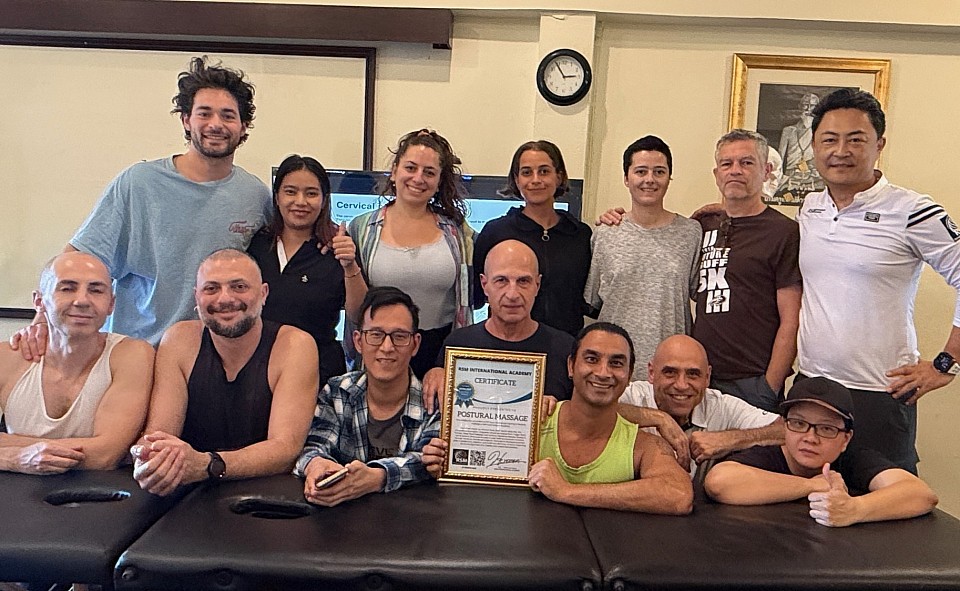
Trigger Point Therapy Course
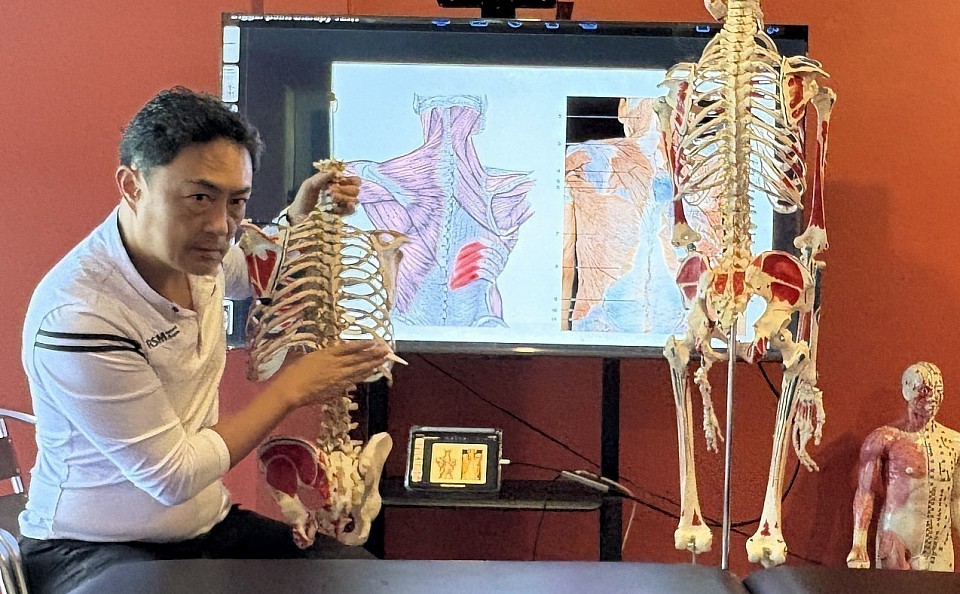
Trigger point clinical palpation
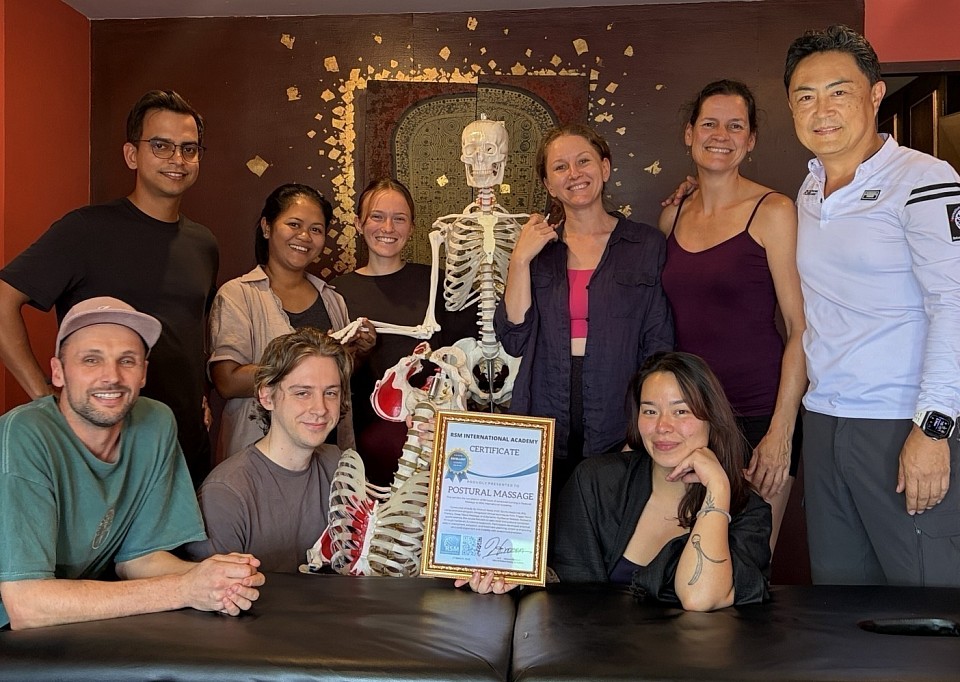
Netherlands national team massage therapist join RSM
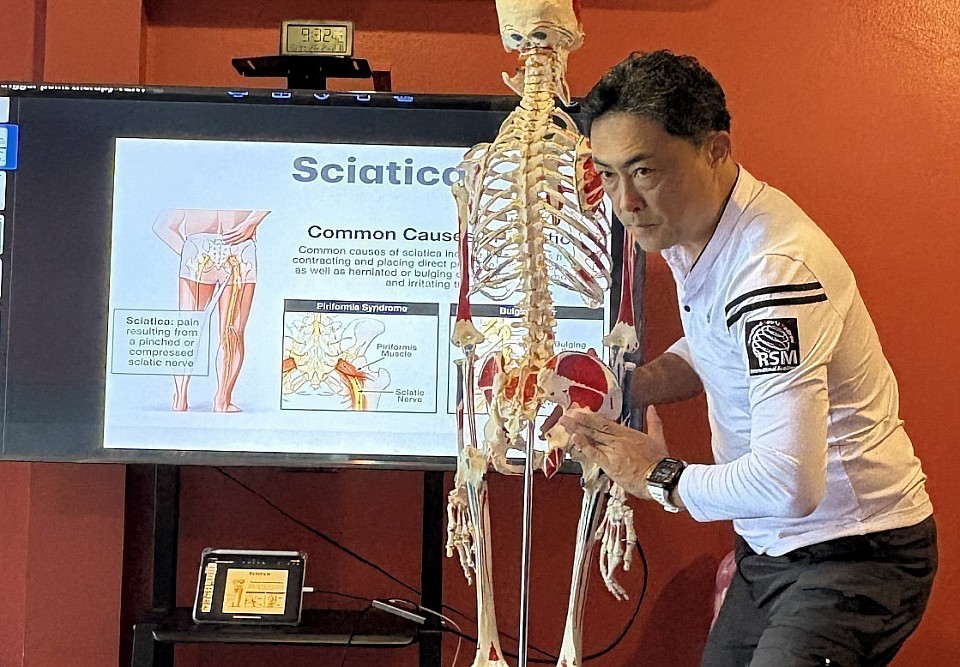
Mechanical Assessment & Manual Therapy Protocol
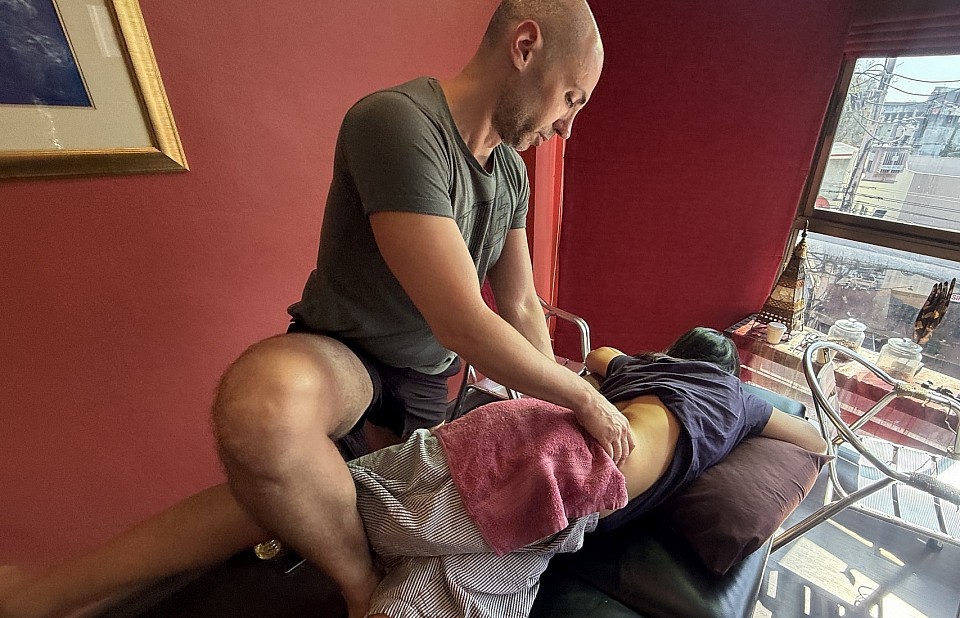
Manual Therapy for chronic Trigger Point Pain
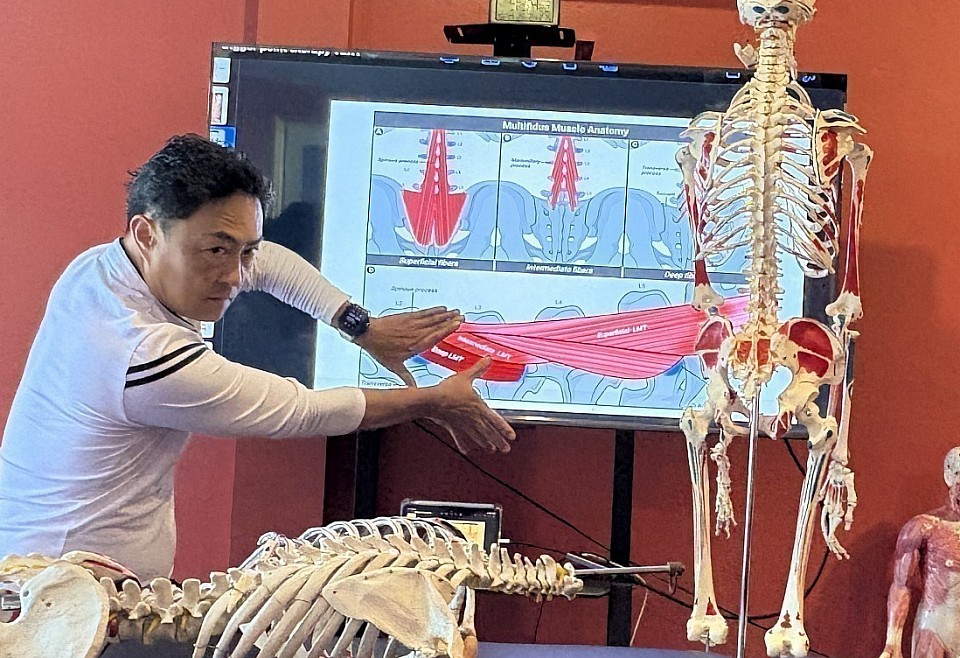
Clinical Myofascial Trigger Point Therapy for Lower Back Pain
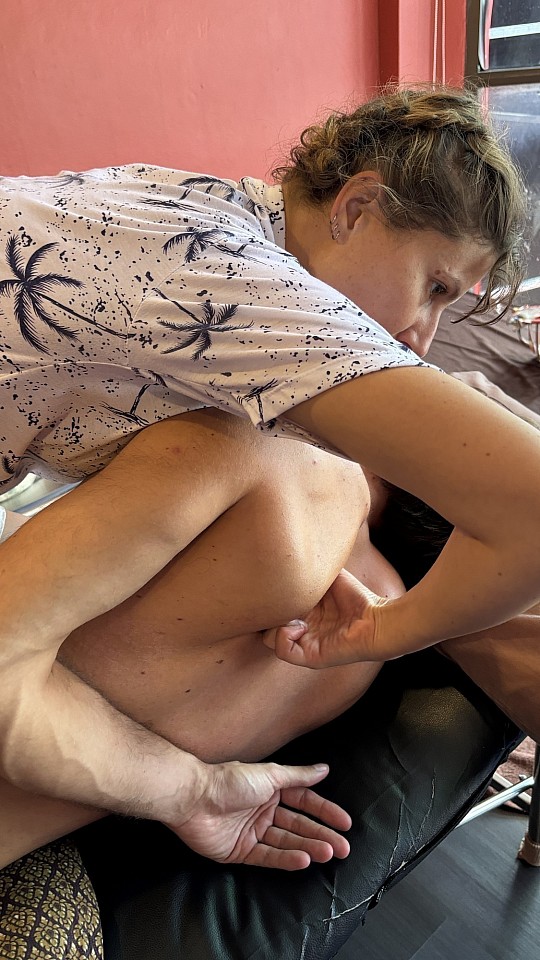
Clinical Palpation for pain relief
Master Trigger Point Massage Through Clinical Palpation Training
Master the skills to identify active and latent trigger points, muscle tightness, adhesions, and myofascial restrictions. This practical Trigger Point Therapy training focuses on precise clinical palpation techniques for assessing muscle tension and movement-related restrictions.
🔸 Limited to just 14 participants, the course allows you to learn directly from Hironori Ikeda, MSc Sports Medicine, with hands-on correction of palpation, pressure direction, and therapist positioning.
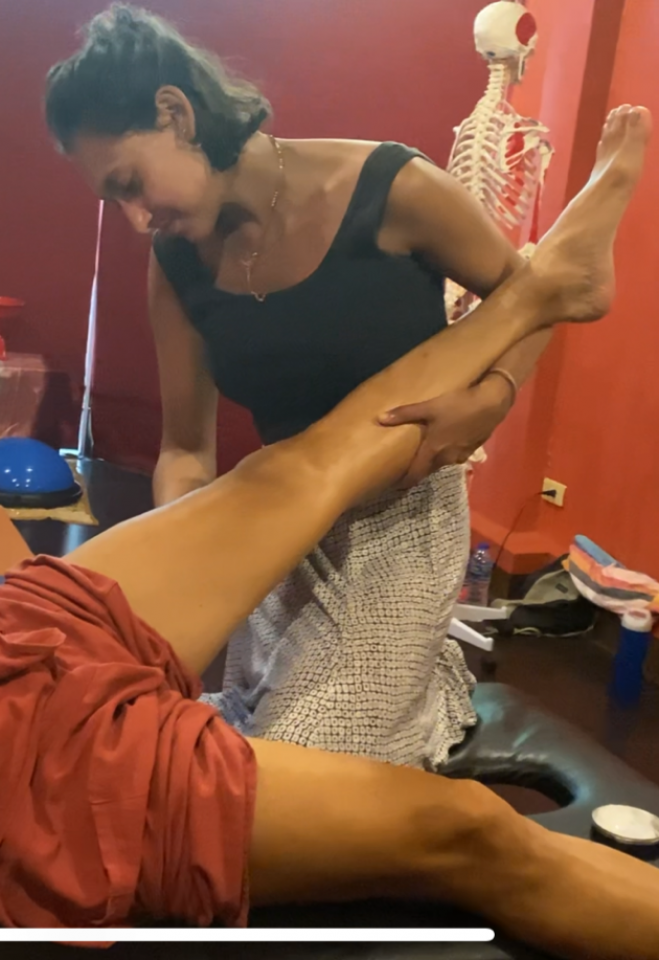
Dr. Amrita from Brighton Medical Hospital, UK
Functional Assessment for Effective Pain Relief
By the end of the course, you will develop visual assessment and clinical palpation skills based on functional anatomy, helping you understand how muscle tension, movement patterns, and the kinetic chain can contribute to pain and restricted movement.
🔸 Learn to recognize movement imbalances and develop individualized massage strategies instead of applying the same treatment routine to every client.
RSM Trigger Point Therapy Course in Italy
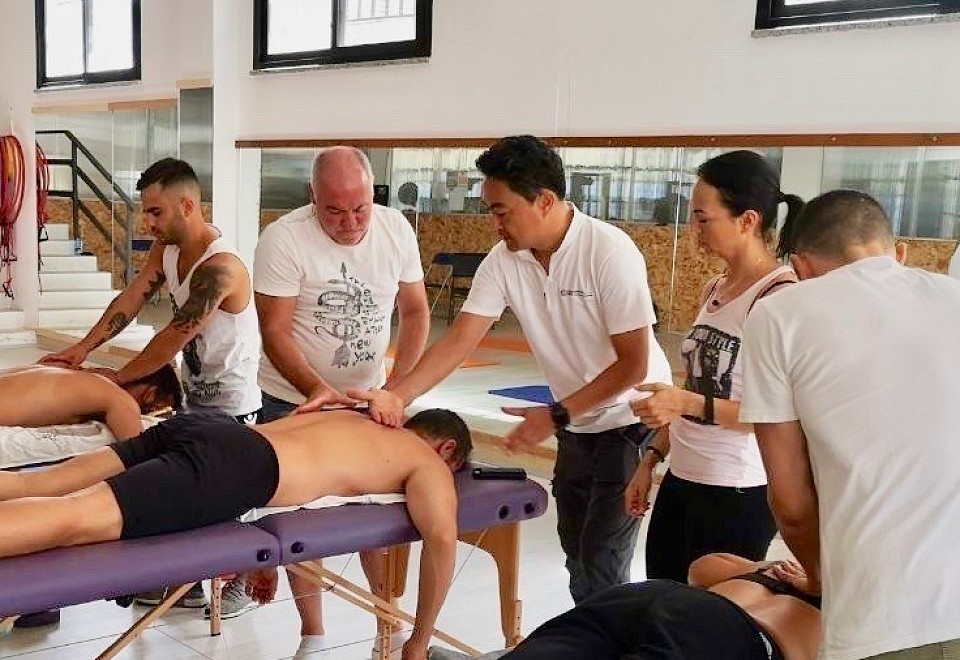
Trigger Point Therapy for neck and shoulder pain

RSM offering therapy in Italy
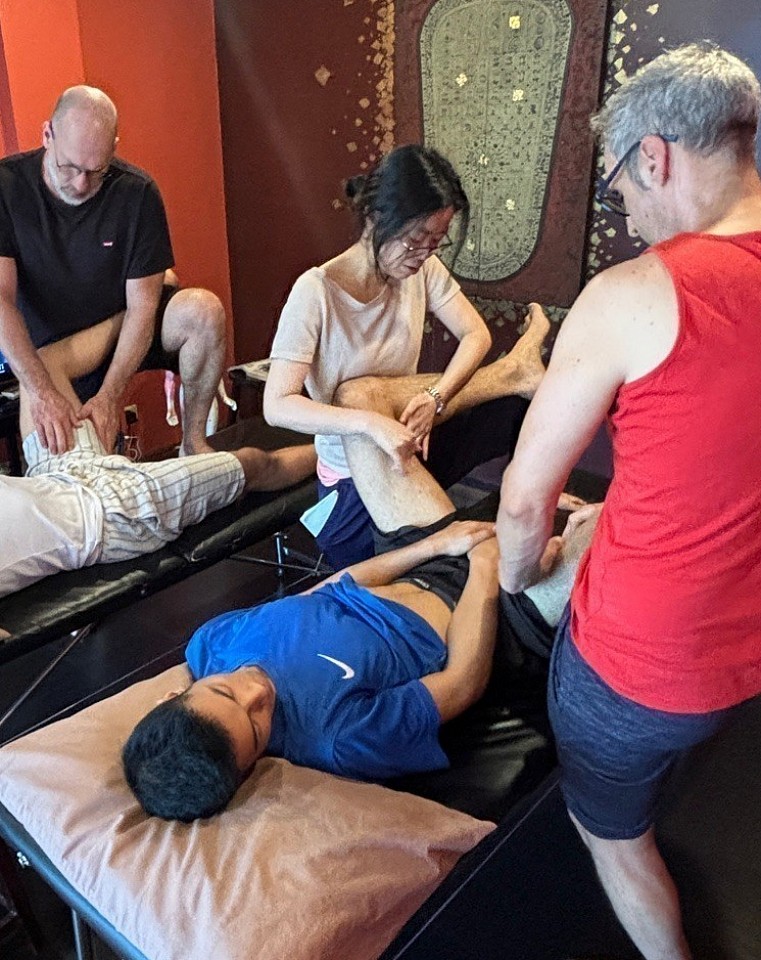
Advanced Massage Stroke Techniques
Advanced Massage Stroke Techniques: Functional Mobility and Neuromuscular Integration
This course component focuses on mastering massage strokes according to muscle structure and function, including fiber direction, mobility, and neuromuscular activity.
🔸 By understanding principles such as muscle spindle and Golgi tendon organ responses, along with myofascial and neural reflexes, you will develop practical massage techniques for improving mobility and applying more precise Trigger Point Therapy.
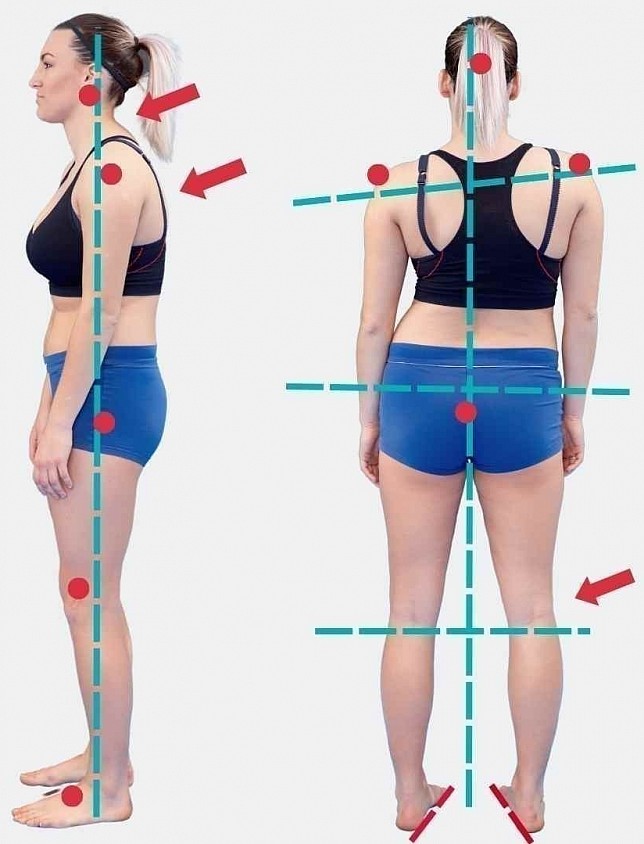
Pain-Avoidance Postures and Trigger Point Therapy
Pain-Avoidance Postures and Pain Relief: Addressing Root Causes
Active and latent trigger points can contribute to muscle tension, altered movement, and limited range of motion. You will learn to observe pain-avoidance posture, kinetic-chain movement, and functional restrictions through palpation and movement assessment.
🔸 Based on sports medicine principles, this training develops practical skills for pain management, mobility, rehabilitation-oriented massage, and sports performance.
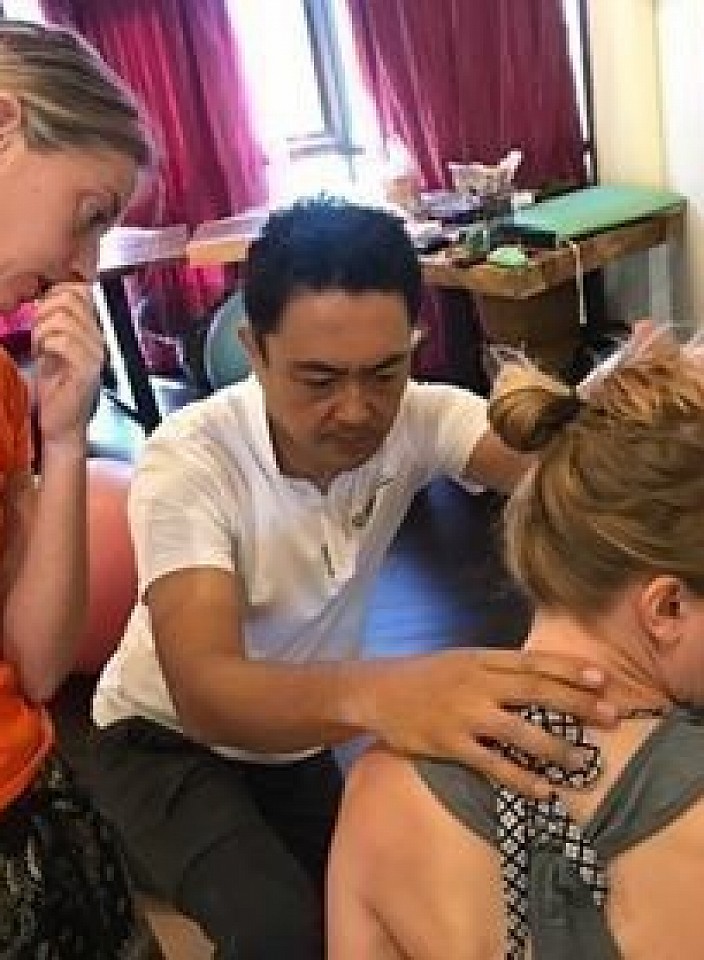
Hironori Ikeda's advanced pain relief Palpation Techniques
Advanced Manual Therapy Techniques for Active, Latent, and Myofascial Trigger Points
Learn to identify and work with active, latent, and myofascial trigger points using advanced clinical palpation techniques. By combining palpation, stretching, and joint mobilization, you will learn to distinguish between muscle tension, myofascial restriction, joint-related restriction, and possible nerve-glide limitations.
🔸 This practical manual therapy approach helps you select more appropriate techniques for different clients while improving mobility and treatment precision.
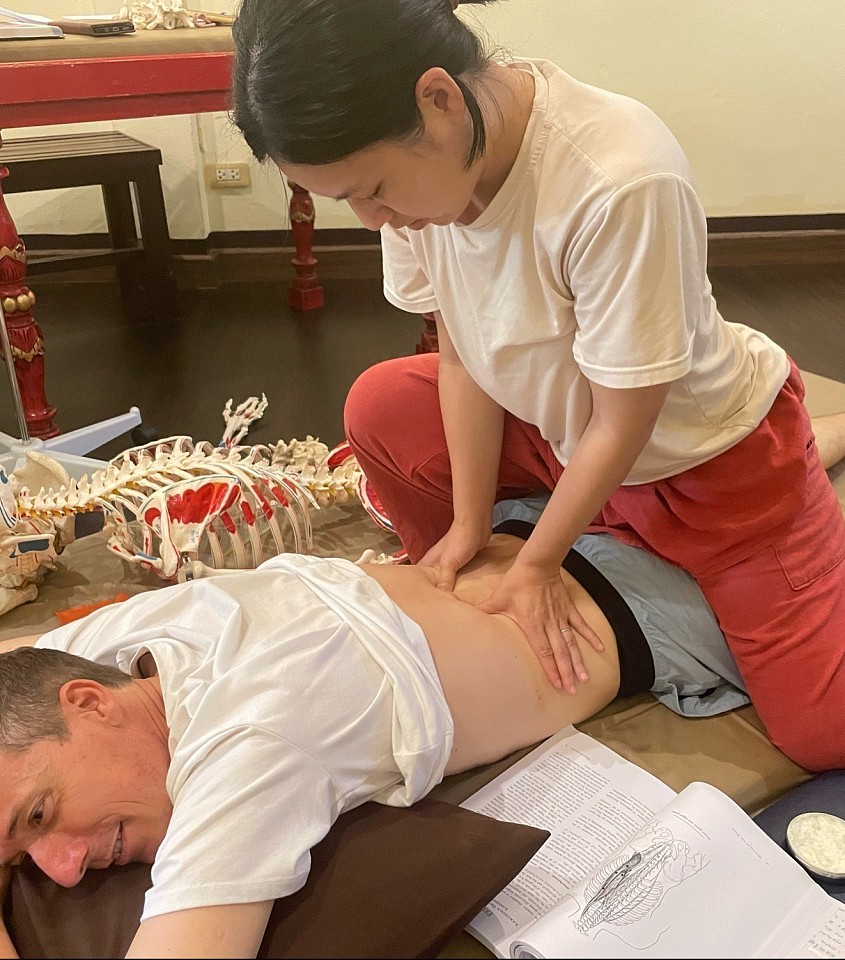
Trigger point therapy for lower back pain
Dynamic Core Postural Stability Techniques for Your Professional Massage Sessions
RSM Massage Courses emphasize Dynamic Postural Stability for the therapist, teaching efficient techniques for both massage table and mat use. Learn body positioning, weight transfer, and core engagement to reduce unnecessary strain on the neck, shoulders, fingers, wrists, and elbows.
🔸 Hironori Ikeda, MSc Sports Medicine, teaches these principles according to each therapist’s body characteristics, helping you apply controlled pressure efficiently and build a sustainable professional career.
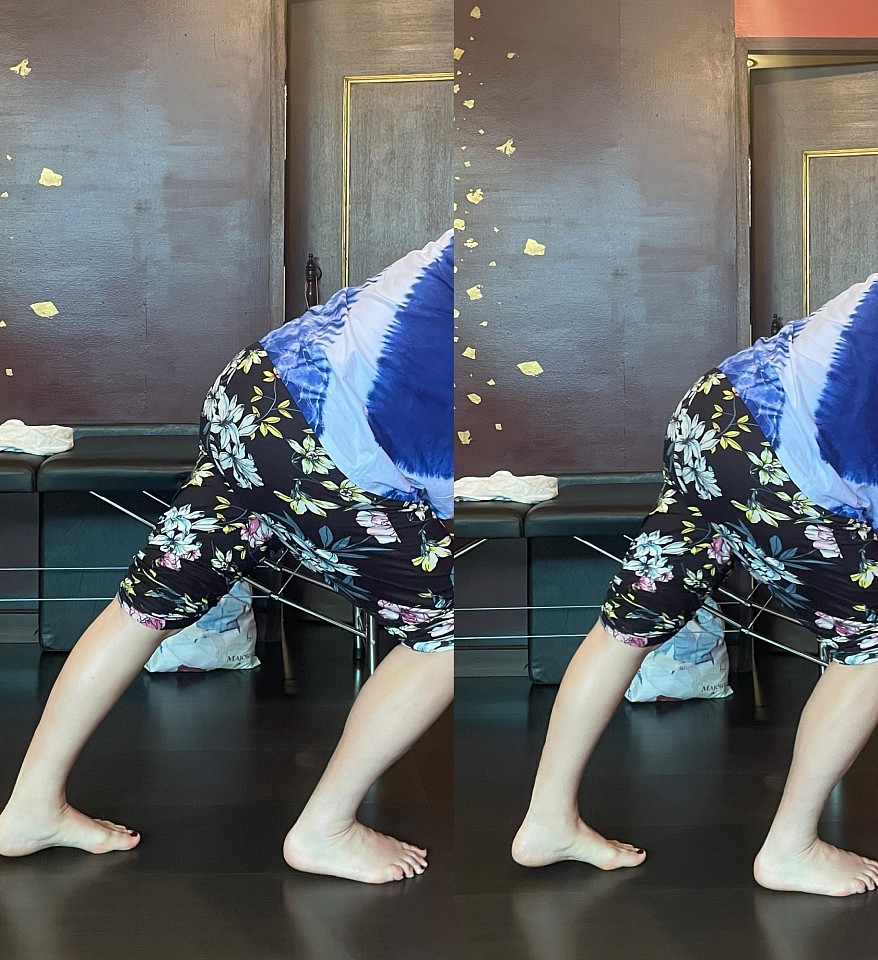
RSM Trigger Point Therapy for Range of Motion
Elevate Your Professional Path by Mastering Clinical Palpation with Trigger Point Therapy
Master Trigger Point Therapy while developing practical skills for assessing myofascial restrictions, joint mobility, muscle glide, and nerve-glide limitations. These skills provide an essential foundation for therapists who want to progress beyond basic massage techniques.
🔸 Progress from Trigger Point Therapy to Deep Tissue Massage and Dynamic Myofascial Release to build a broader professional manual therapy skill set through the RSM Sports Medicine Massage Course Series.
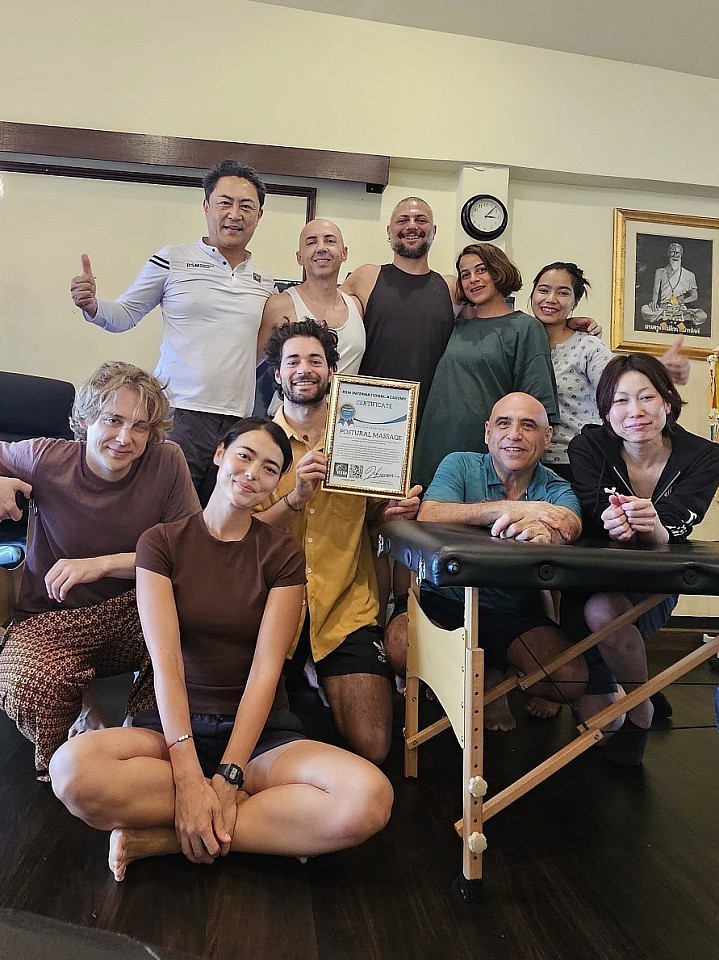
Personal trainers and body builders also come to RSM to learn trigger point therapy
Trigger Point Therapy Certification and Career Development
RSM’s Trigger Point Therapy certification strengthens the practical skill set of massage therapists, sports trainers, yoga and Pilates instructors, physiotherapists, healthcare professionals, and other practitioners working with human movement.
🔸 RSM provides its own course certificate, which is not affiliated with government organizations. Before practicing professionally, students should check the massage or manual therapy regulations that apply in their own country.
Is RSM’s Trigger Point Therapy Course in Chiang Mai Suitable for Both Beginners and Experienced Therapists?
Yes. RSM International Academy’s Trigger Point Therapy Course in Chiang Mai is designed for both beginners and experienced practitioners who want to develop stronger clinical palpation, functional anatomy, and movement-assessment skills.
Around 30% of RSM students are experienced professionals, including massage therapists, physiotherapists, healthcare practitioners, and sports professionals. The remaining students are mainly beginners or early-career practitioners, including yoga and Pilates instructors, personal trainers, and people adding professional massage skills to their existing work.
🔸 Rather than simply memorizing trigger point locations, RSM teaches practical trigger point massage skills, including accurate palpation, assessment of muscle tension and movement, understanding of the kinetic chain, and adapting massage techniques to the individual client. These skills provide an essential foundation before progressing to higher-level training such as Deep Tissue Massage, Sports Massage, and Dynamic Myofascial Release.
How Much Hands-On Practice Is Included in RSM’s Trigger Point Therapy Course?
The majority of RSM’s 20-hour Trigger Point Therapy Course is hands-on practical training. Classes are limited to a maximum of 14 students so that Hironori Ikeda, MSc Sports Medicine, can directly supervise and correct each student’s clinical palpation and massage techniques.
Students practice on real bodies throughout the course, developing trigger point training skills in palpation, pressure control, finger direction, therapist positioning, functional anatomy, and movement assessment.
🔸 The goal is not simply to learn a massage routine. Students repeatedly palpate, apply techniques, reassess, and adjust their approach, developing practical skills that can be adapted to different clients and body types.
